Variable frequency drives control motor speed with fast switching pulses, and those pulses are hard on ordinary wire. Voltage spikes, electrical noise, and stray currents can damage insulation, upset sensors, and shorten motor life. A VFD cable is built specifically to handle this stress, and choosing the right one protects both the drive and the motor. This guide explains how VFD cables are constructed, how to select them, and what installers in the USA should know, whether the cable is bought by the spoil or built into Custom Cable Assemblies for machinery.
In this article
- 01What Is VFD Cable?
- 02Why Standard Cable Fails on a Drive
- 03How VFD Cable Is Built
- 04Voltage Ratings and Approvals
- 05Installation Best Practices
- 06How to Select a VFD Cable
- 07Common Applications of VFD Cable
- 08Testing and Quality Checks
- 09Limitations to Keep in Mind
- 10Custom VFD Cable Assemblies from Auctus Electro
- 11Frequently Asked Questions (FAQs)
- 12Conclusion
What Is VFD Cable?
VFD cable is a shielded power cable designed to connect a variable frequency drive to an AC motor. It typically uses three power conductors, balanced ground conductors, a shield, and a robust jacket. Most designs use cross-linked polyethylene (XLPE) insulation, which handles higher voltage stress and temperature than standard compounds. Our guide to Wire Insulation Materials explains why insulation choice matters so much here.
Why Standard Cable Fails on a Drive
Drives create rapidly rising voltage pulses, and on long motor leads reflected waves can raise peak voltage at the motor terminals well above the supply level. Thin general-purpose insulation, such as the compounds described in our PVC Coated Wire guide, can break down under that repeated stress. The consequences include:
Repeated voltage peaks wear down the cable and motor windings.
Unshielded cable radiates interference into encoders, sensors, and communication lines.
Common-mode current can flow through motor bearings and cause premature wear.
Poor grounding and high capacitance can cause drive faults.
How VFD Cable Is Built
Conductors and Grounds
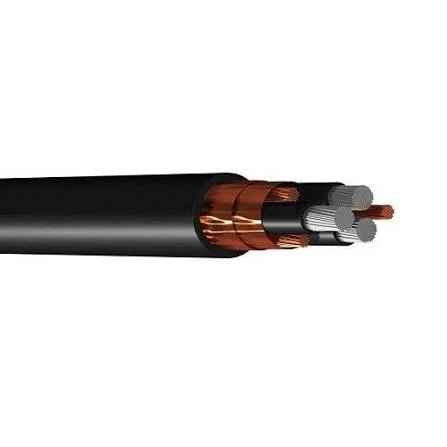
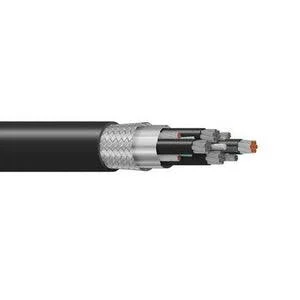
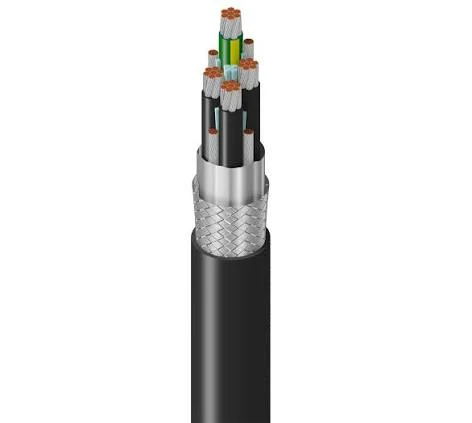
Quality VFD cable uses three symmetrical power conductors with ground conductors placed evenly around them. This balanced layout keeps capacitance even and gives high-frequency noise a low-impedance return path. Proper grounding practice is covered in our article on Ground Wire.
Shielding
A foil layer combined with tinned copper braid blocks noise at both low and high frequencies, while some designs use continuous corrugated or interlocked aluminum armor for both shielding and mechanical protection. How the shield is terminated at each end often decides real-world performance, and Engineering Support can review that detail before production.
Insulation and Jacket
XLPE insulation is commonly rated at 90°C and is often paired with a flame-retardant, oil-resistant jacket. Harsher chemical or high-temperature areas may call for fluoropolymers, as described in our FEP Insulation guide.
Voltage Ratings and Approvals
VFD cable is commonly offered in ratings from 600 volts up to about 2,000 volts, so match the rating to the drive output and bus voltage. In North America, look for listings such as TC-ER for tray use or MC for armored cable, and confirm requirements with the drive maker and local code. When the cable lands in a panel or enclosure, Electromechanical Assemblies help keep glands, lugs, and routing consistent.
Installation Best Practices
Good installation protects good cables. Keep motor leads as short as practical, follow the drive manufacturer’s length limits, and add output filters on very long runs. Run VFD cable away from control and signal wiring, and cross other cables at right angles. For underground or outdoor routing, read our Direct Burial Wire guide for basic depth and protection.
Terminate the shield with a full 360-degree connection at both the drive and the motor, rather than a long pigtail wire, because pigtails weaken high-frequency shielding. Bond the shield and grounds to the drive and motor frames, and keep field bus or Ethernet runs, such as patch cables, well separated from the motor leads.
How to Select a VFD Cable
Selection starts with the drive and motor specifications. Some systems also need brake and feedback wires, and our Integrated Cable guide explains how those functions can share one construction. Work through these checks:
Choose a rating and conductor size above drive output, including motor full-load current.
Check length limits and consider filters for long motor leads.
Pick braid and foil for flexibility or armor for rugged environments.
Match the jacket to oil, moisture, temperature, and abrasion.
Moving machinery needs fine-stranded, flexible construction.
Confirm UL listings and any local code requirements.
Common Applications of VFD Cable
VFD cable appears wherever motor speed is controlled, from buildings to harsh process sites where specialty insulation such as Kynar wire may also be used. Typical uses include:
Energy-saving speed control in buildings and plants.
Smooth, adjustable speed on production lines.
Precise control with minimal noise problems.
Long motor leads and demanding conditions.
Testing and Quality Checks
A VFD cable carries high-energy pulses, so each finished assembly should be verified for continuity, insulation integrity, and shield connection before shipment. Careful assembly through Electronics Contract Manufacturing helps keep terminations consistent across production runs, and Supply Chain and Inventory Management keeps cable and connectors available for repeat builds.
Limitations to Keep in Mind
VFD cable costs more than standard power cables and is bulkier because of the shield and extra grounds. It reduces, but does not eliminate, reflected wave and noise problems, so output filters and good grounding are still needed on long runs. It is also not a data cable, so signal and network links need their own properly shielded cabling. Where fiber and power must share one route, hybrid cables are worth a look.
Custom VFD Cable Assemblies from Auctus Electro
Auctus Electro builds cut-to-length, terminated assemblies in Rolling Meadows, Illinois, so your cable arrives labeled, tested, and ready to install. Quick Turn Cable Assembly is useful for prototypes and field replacements when downtime is costly.
See examples in our Product Gallery, or Request a Quote with your drive and motor details.
Frequently Asked Questions (FAQs)
What is VFD cable?
VFD cable is shielded, balanced power cable designed to carry the pulsed output of a variable frequency drive to a motor while resisting voltage stress and limiting noise.
Can I use regular THHN wire for a VFD?
It is not recommended. Unshielded wire offers little protection against voltage spikes and noise, and drive manufacturers generally specify shielded VFD cables.
Why does VFD cable have three ground wires?
Symmetrical ground conductors keep the cable balanced, reduce common-mode noise, and give high-frequency currents a low-impedance return path.
How long can a VFD motor cable be?
The limit depends on the drive, switching frequency, and motor, so follow the manufacturer’s guidelines and consider output filters for long runs.
Where can I get custom VFD cable assemblies in the USA?
You can work with a domestic manufacturer such as Auctus Electro to build terminated, tested assemblies from your drawings.
Conclusion
The right VFD cable protects your drive, your motor, and the equipment around them. Match voltage, shield, grounding, and length to the real application, terminate the shield correctly, and verify the finished assembly. When you are ready to turn a specification into a tested product, Auctus Electro can help you move from drawing to production.

Auctus Electro Assembly delivers a wide range of electrical solutions with fast turnaround times and reliable service. Wire harnesses, cable assemblies, box builds and electronics contract manufacturing from Rolling Meadows, IL.
Request a Quote