Open almost any electronic device, control box, or appliance and you will find short runs of thin, colorful wire connecting boards, switches, sensors, and power supplies. That is hook up cable, the small-gauge wiring that holds equipment together from the inside. It looks simply, but the wrong style can overheat, crack, or fail a safety approval. This guide explains what hook up cable is, how to read its ratings, and what to check before ordering, whether you need a few spools or custom Wire Harness and Cable Assemblies for products made across the USA.

In this article
- 01Defining Hook Up Cable and Hook Up Wire
- 02What Is Inside a Hook Up Cable
- 03Reading UL AWM Styles Without Guesswork
- 04Insulation Options: PVC, Silicone, and Fluoropolymers
- 05Single Conductor or Multi-Conductor Builds
- 06Shielding Options for Cleaner Signals
- 07Equipment That Uses Hook Up Cable Every Day
- 08Gauge, Current, and Voltage Drop Inside the Box
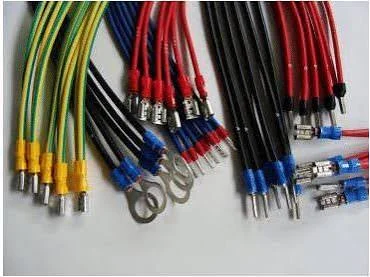
- 09Marking, Color Codes, and Traceability
- 10Hook Up Cable Is Not Building Wire
- 11Soldering, Crimping, and Stripping Tips
- 12Hook Up Cable Doubts Cleared Up
Defining Hook Up Cable and Hook Up Wire
The terms are often used together. Hook up wire usually means a single insulated conductor, while hook up cable can also mean several insulated conductors inside one jacket. Both are used for internal wiring where the conductors stay inside the equipment, away from the public. The most common insulation is PVC, as explained in our PVC coated wire guide, and an Engineering Support review can confirm which style suits your product.
What Is Inside a Hook Up Cable
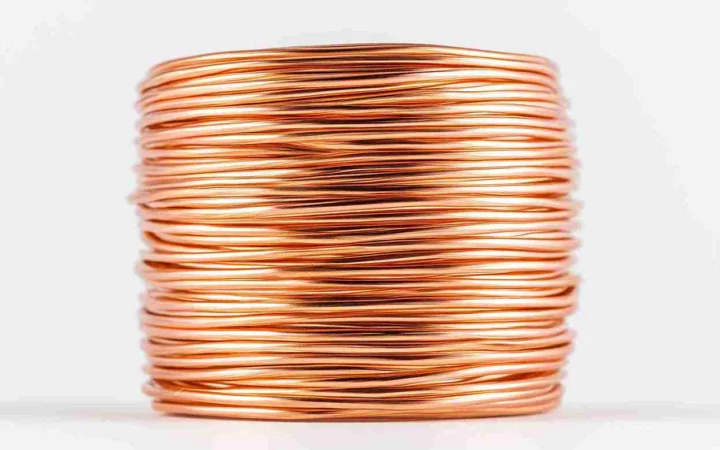
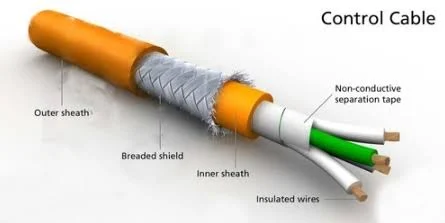
A typical construction starts with a copper conductor, either bare or tin-plated, made of many fine strands so it can flex and route around components. A layer of insulation surrounds each conductor, and multi-conductor versions add an outer jacket. Insulation types are compared in our guide to Wire Insulation Materials. Inside finished products, this wiring links the parts of larger electromechanical assemblies.
Reading UL AWM Styles Without Guesswork
Hook up cable is commonly listed as Appliance Wiring Material (AWM) by UL, and each style number defines voltage, temperature, and insulation. For example, UL 1007 is a popular 300-volt, 80°C PVC style, UL 1569 steps up to 105°C, and UL 1015 covers 600 volts at 105°C. UL 2464 is a widely used multi-conductor style. Always match the style with the product and keep common styles in stock through Supply Chain and Inventory Management.
Insulation Options: PVC, Silicone, and Fluoropolymers
Insulation sets the temperature range, flexibility, and cost, and a partner in Electronics Contract Manufacturing can help match it to your design:
Economical, flame resistant, and the default for most indoor equipment.
Very flexible and stable at high temperature, popular in heaters and lighting.
Excel in heat, chemicals, and thin walls, as covered in our FEP insulation guide.
Offers added toughness and heat resistance in demanding enclosures.
Single Conductor or Multi-Conductor Builds
Single conductors are easy to route one at a time, while multi-conductor cable keeps several circuits together, reduces clutter, and speeds installation. Machine builders often use it where many signals travel to the same place, a use that overlaps with our control cable guide. Sample lengths for testing your product are available through Quick Turn Cable Assembly.
Shielding Options for Cleaner Signals
Shielded hook up cable uses aluminum foil with a drain wire or a copper braid to block interference, which helps with sensors, audio, and low-level analog signals. Pairs are often twisted as well, a technique explained in our wire twisting article, and examples of finished shielded builds appear in our Product Gallery.
Equipment That Uses Hook Up Cable Every Day
Hook up cable is everywhere inside equipment, and you can explore related work through Our Services. Typical uses include:
Board-to-board and board-to-panel connections.
short runs between relays, PLC terminals, and sensors.
Internal power and sensor wiring.
Low-voltage and driver connections.
Compact, reliable internal wiring.
Gauge, Current, and Voltage Drop Inside the Box
Small wires can still overheat, so size it for the actual current and the temperature inside the enclosure. Fine gauges such as 22 or 24 AWG are suitable for low-current signals, while 18 or 16 AWG suits supplies and heaters. Short runs rarely suffer voltage drop, but low-voltage circuits can be sensitive, so check the numbers. Designers who plan this early with a supplier of custom Cable Assemblies avoid redesigning after the first prototype.
Marking, Color Codes, and Traceability
Colors and printed markings make wiring faster to build and easier to service. Agree on a color scheme in the drawing, such as one color for power and another for signals, and ask for lot traceability on regulated products. Reliable sourcing through Supply Chain and Inventory Management keeps those colors and styles consistent across production runs.
Hook Up Cable Is Not Building Wire
AWM-listed wire is meant for internal wiring of listed equipment, not for the permanent wiring of a building. For conduit runs and panels, use field-wiring types such as THWN wire and follow the NEC. Keeping this distinction clear avoids inspection failures and unsafe installations, and a Wire Harness manufacturer can build the internal harness while your installer handles the building side.
Soldering, Crimping, and Stripping Tips
Termination quality matters as much as the wire. Strip insulation cleanly without nicking strands, crimp with tools matched to the terminal and gauge, and use tin-plated conductors when soldering. Ferrules help stranded wire hold in screw terminals, and strain relief near the connector protects against vibration. Consistent terminations are a core part of dependable Electromechanical Assemblies.
Hook Up Cable Doubts Cleared Up
1. What is hook up cable used for?
It is used for internal wiring of electronics, control panels, appliances, and instruments, linking boards, switches, and sensors.
2. What is the difference between hook up wire and hook up cable?
Hook up wire is a single insulated conductor. Hook up cable generally holds several insulated conductors in one jacket, which makes routing cleaner in tight equipment.
3. What does UL AWM mean?
AWM stands for Appliance Wiring Material, a UL category for wire used inside equipment, with style numbers defining voltage and temperature.
4. Can I use hook up cable for building wiring?
No. Use field-wiring types approved by the NEC. For help choosing the right wire, Request a Quote.
5. Where can I get custom hook up cable assemblies in the USA?
You can work with a domestic manufacturer such as Auctus Electro to build cut, terminated, and labeled assemblies from your drawings.

Auctus Electro Assembly delivers a wide range of electrical solutions with fast turnaround times and reliable service. Wire harnesses, cable assemblies, box builds and electronics contract manufacturing from Rolling Meadows, IL.
Request a Quote