Behind every smooth-running conveyor, packaging line, and process plant is a web of small signals telling machines when to start, stop, and move. Control cable carries those signals between PLCs, sensors, relays, and motor starters. It looks simply, but a poorly chosen cable can cause random faults, false trips, and long troubleshooting sessions. This guide explains how control cable is built, how to choose one, and what machine builders and plant engineers across the USA should check, especially when cable is delivered as part of custom Wire Harness and Cable Assemblies.
In this article
- 01What a Control Cable Actually Does
- 02Anatomy of a Control Cable
- 03Shielded or Unshielded: Handling Electrical Noise
- 04Jacket Choices for Fixed and Moving Installations
- 05How Control Cable Differs from Power and Instrumentation Cable
- 06Conductor Counts, Gauge, and Color Codes
- 07Machines and Plants That Rely on Control Cable
- 08Routing Control Cable Without Picking Up Noise
- 09From Bulk Spool to Terminated Control Assemblies
- 10Proving Out Control Wiring Before Start-Up
- 11What Machine Builders Ask About Control Cable
What a Control Cable Actually Does
Control cable is a multi-conductor cable made for low-power circuits that switch, sense, and command equipment. Typical circuits run from 24 volts DC up to 120 volts AC, so the cable carries modest current but needs reliable insulation, clean signal paths, and clear conductor identification. It differs from heavy power cable because its job is communication, not energy delivery. An Engineering Support review can help confirm which circuits belong in one cable, and which need separation.
Anatomy of a Control Cable
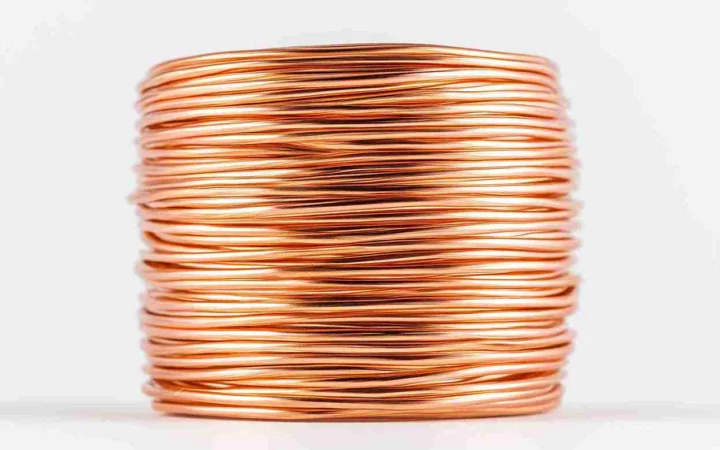
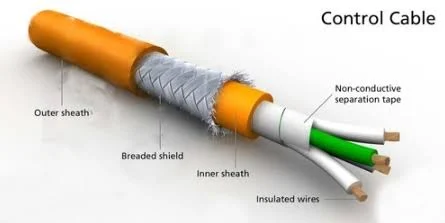
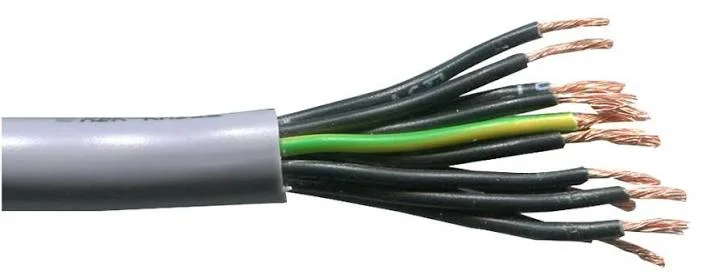
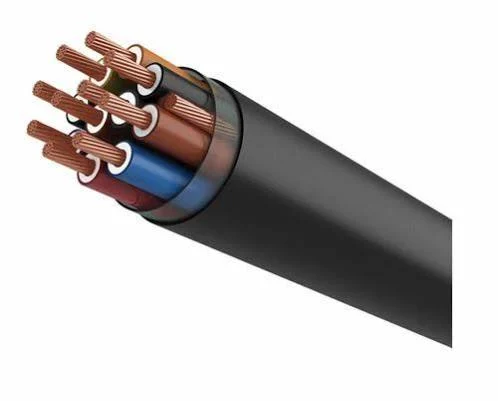
Most control cables use stranded copper conductors, commonly 18, 16, or 14 AWG, each covered with its own insulation. Common compounds are described in our guide to wire insulation materials. The insulated conductors are cabled together with fillers, wrapped, and covered by an outer jacket. Inside panels and enclosures, this cable ties into larger Electromechanical Assemblies where terminal blocks and connectors finish the circuit.
Shielded or Unshielded: Handling Electrical Noise
Unshielded cables are fine for simple on-off circuits in quiet areas. Near drives, welders, and radio sources, shielding becomes important. An overall foil shield with a drain wire blocks most interference, while braid offers stronger protection and better flex life. Shields are usually grounded at one end for low-frequency noise unless the design calls for both, and our ground wire guide explains the grounding basics. A partner in Electronics Contract Manufacturing can build panels with the shield terminations done correctly.
Jacket Choices for Fixed and Moving Installations
The jacket decides where the cable can live, and Quick Turn Cable Assembly is useful when you need a sample to test on a machine. Common options include:
Economical and widely used for fixed wiring, as covered in our PVC coated wire guide.
Strong abrasion and oil resistance, often chosen for moving machinery.
Stays flexible in cold conditions and handles repeated bending.
Tray and outdoor runs may require specific markings.
How Control Cable Differs from Power and Instrumentation Cable
These cable families overlap but serve different purposes. Building wire such as THWN is single-conductor and meant for conduct. Drive output cable, like VFD cable, is built for voltage spikes and noise at the motor. Instrumentation cable uses twisted, shielded pairs for low-level analog signals, and the principle behind it is explained in our wire twisting guide. Control cable sits in between, carrying many discrete signals in a single run, and our Engineering Team can help decide which type each circuit needs.
Conductor Counts, Gauge, and Color Codes
Control cable is sold with anywhere from two to dozens of conductors, so choose a count that includes spares, often around 20 percent, for future changes. Gauge depends on circuit current and voltage drop, which matters more on 24-volt circuits where a small loss can drop out a relay. Conductors are identified either by solid colors or by numbered black wires, so confirm which method matches your drawings. Consistent availability of common counts depends on good supply chain and inventory management.
Machines and Plants That Rely on Control Cable
Control cable shows up wherever automation exists, and you can see related builds in our Product Gallery. Typical uses include:
Sensors, limit switches, and starters.
Fast, repeatable signaling across stations.
Dampers, actuators, and thermostats.
Interlocks, alarms, and remote start and stop.
Flexible cable for moving axes.
Routing Control Cable Without Picking Up Noise
Good routing is cheap insurance, and it costs almost nothing compared with chasing intermittent faults later. Keep control cables away from motor leads and power feeders, cross them at right angles when needed, and avoid long parallel runs. Use proper strain relief at every entry and follow bend radius limits from the maker. For moving equipment, a cable that combines power and signals can simplify routing, as described in our integrated cable guide, and Our Services include building those assemblies.
From Bulk Spool to Terminated Control Assemblies
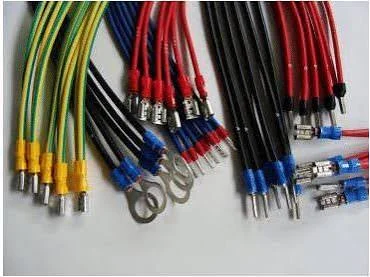
Many projects need more than bulk cable. Ends can be terminated with ferrules, ring terminals, or M12 and other circular connectors, then labeled and tested. For fiber and copper in one run, see our hybrid cables article, and for network links, our guide to patch cables covers Ethernet connections. A Wire Harness manufacturer can supply the whole set cut, terminated, and tested.
Proving Out Control Wiring Before Start-Up
Before a machine is powered, every control circuit should be checked end to end. Continuity tests confirm each conductor lands on the right terminal, insulation tests catch damage from pulling, and shield checks confirm the drain wire is connected where intended. Documenting these results saves hours during commissioning and gives maintenance a baseline for later, and pre-built Electromechanical Assemblies arrive with this testing already done, which makes start-up faster and troubleshooting simpler.
What Machine Builders Ask About Control Cable
1. What is control cable used for?
It carries low-power signals between PLCs, sensors, relays, and motor starters in machines and plants.
2. Are control cables the same as power cables?
No. Control cable is for low-current signals, while power cable delivers energy to loads such as motors and heaters.
3. When do I need shielded control cable?
Use shielding near drives, welders, or radio sources, or where long runs share space with power wiring.
4. How many spare conductors should I include?
Planning about 20 percent spares is common practice. For custom conductor counts and terminations, you can Request a Quote.
5. Where can I get custom control cable assemblies in the USA?
You can work with a domestic manufacturer such as Auctus Electro to build cut, terminated, and labeled assemblies from your drawings.

Auctus Electro Assembly delivers a wide range of electrical solutions with fast turnaround times and reliable service. Wire harnesses, cable assemblies, box builds and electronics contract manufacturing from Rolling Meadows, IL.
Request a Quote