A welder is only as good as the current that reaches the arc, and that current travels through the cable. Welding cable is built to carry hundreds of amps, flex all day in a busy shop, and shrug off sparks, oil, and drag them across concrete. Choosing the wrong cable wastes power, overheats, and shortens the life of expensive equipment. This guide covers how welding cables are made, how to size it, and what fabricators and equipment builders across the USA should check before ordering, including when cable arrives as part of custom Wire Harness and Cable Assemblies.
In this article
- 01What Sets Welding Cable Apart from Other Heavy Wire
- 02Inside the Cable: Strands, Insulation, and Jacket
- 03EPDM, Neoprene, or PVC: Choosing a Jacket
- 04Picking the Right Gauge for Amperage and Distance
- 05Electrode Leads, Work Leads, and Extension Runs
- 06Lugs, Connectors, and Finished Cable Assemblies
- 07Where Welding Cable Earns Its Keep
- 08Why Building Wire and Battery Cable Fall Short
- 09Keeping Welding Cable Safe and Long-Lasting
- 10Specifying Welding Cable: A Checklist
- 11Welding Cable Questions Buyers Ask
What Sets Welding Cable Apart from Other Heavy Wire
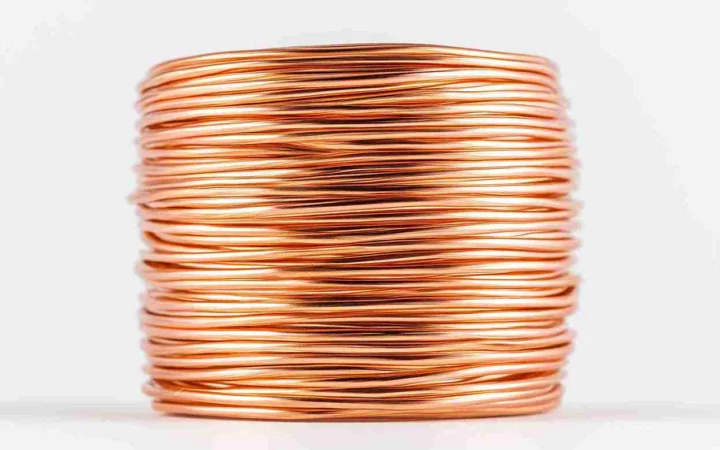
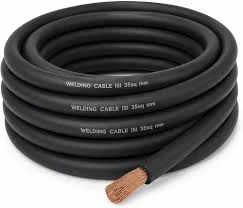
Welding cable is a single-conductor power cable made with very fine copper strands and a soft, tough jacket. That construction lets a heavy cable bend easily around fixtures and workpieces, which stiff building wire cannot do. It is also designed for the harsh duty cycle of arc welding, with insulation that tolerates heat and abrasion, as explained in our guide to wire insulation materials. An Engineering Support review can help confirm which construction suits your process.
Inside the Cable: Strands, Insulation, and Jacket
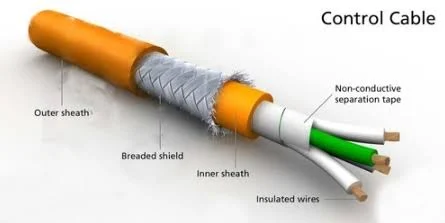
The conductor is usually bare or tinned copper in a fine, flexible stranding class, often called Class K or Class M. More strands mean better flexibility and longer flexibility. A separator layer sits between the copper and the jacket so the cable can be stripped cleanly. Welding power sources and wire feeders pair this cable with enclosures and terminals built as Electromechanical Assemblies.
EPDM, Neoprene, or PVC: Choosing a Jacket
Jacket material changes how the cable behaves on the job, and a partner offering Electronics Contract Manufacturing can help match it to the finished product. The common choices are:
Flexible across temperature extremes and resistant to heat, weather, and flame, which makes it popular in industrial shops.
Offers strong oil and abrasion resistance for rough environments.
Lower cost and good moisture resistance, but stiffer in cold weather. Our PVC coated wire guide explains the trade-offs.
Picking the Right Gauge for Amperage and Distance
Gauge depends on welding current, duty cycle, and total cable length, because longer runs lose voltage and generate heat. As a rough example, many 200-amp setups use 2 AWG on short runs and step up to 1 AWG or 1/0 as distance grows. Always confirm with the cable maker and welder manufacturer charts, and keep common sizes stocked through supply chain and inventory management. Use these factors:
Match the cable to the maximum current of the welding process.
Heavier use calls for a larger conductor.
Add the electrode lead and work lead together when judging voltage drop.
Hot shops reduce the current cables can safely carry.
Electrode Leads, Work Leads, and Extension Runs
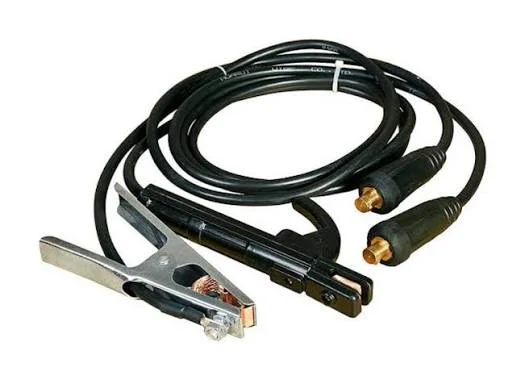
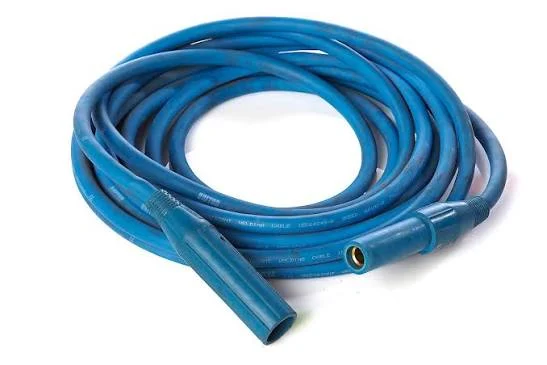
A welding circuit uses two main cables: the electrode lead that carries current to the torch or stinger, and the work lead that returns it from the workpiece clamp. Both should be the same gauge to avoid hot spots and uneven heating, and clean contact at the work clamp matters as much as the cable itself. When a run needs extra reach, extension sections are joined with rated connectors, and a Wire Cutting Machine helps produce lengths accurately, while quick turn cable assembly is handy for urgent replacement leads.
Lugs, Connectors, and Finished Cable Assemblies
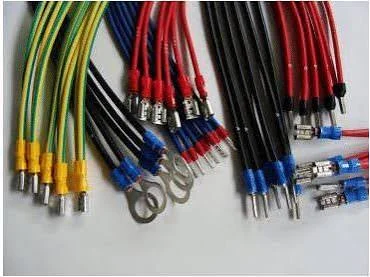
Cable is rarely used. Copper lugs, quick-connect plugs, and ground clamps complete the lead, and the cramp must be tight and well-sealed because a poor joint overheats first and can damage both the lug and the cable. Heat-shrink or molded boots protect the termination from spatter. You can see examples of finished builds in our Product Gallery.
Where Welding Cable Earns Its Keep
Welding cable appears in any job that needs high current with flexibility, and you can explore related work across Our Services. Typical uses include:
Daily stick, MIG, and TIG welding.
Long leads moved across rough sites.
Rugged cable that survives dragging and weather.
Fixed and robotic welding cells.
Robotic cells need cables that withstand millions of flex cycles, and multi-function dress packs follow the same logic as an integrated cable, where power, air, and signals share one protected route. Custom Cable Assemblies keep those runs consistent.
Why Building Wire and Battery Cable Fall Short
Substitutes may look similar but behave differently. Building wires such as THWN wire is stiffer, built for conduit, and not designed for constant flexing or abrasion. Battery cables usually have coarser stranding and different insulation, so it is less flexible and not meant for welding duty. Grounding conductors serve a different purpose from a work lead, so they should never be mixed up, and an Engineering Team can help avoid unsafe substitutions.
Keeping Welding Cable Safe and Long-Lasting
Welding cable lasts longer when it is treated well, and urgent replacement leads are available through quick turn cable assembly when a failure stops production. A few habits make a big difference:
Cracks, cuts, and discolored terminations are early warnings.
Tight coils trap heat and add inductance.
Loose lugs overheat and burn.
Use ramps or covers in traffic areas.
Specifying Welding Cable: A Checklist
Define the maximum amperage and duty cycle.
Include both leads and any extensions.
Choose copper type and fine stranding for the flexibility required.
Pick EPDM, neoprene, or PVC for the environment.
Specify lug size, hole size, and connector style.
Confirm applicable standards and NEC Article 630 requirements.
Welding Cable Questions Buyers Ask
1. What is welding cable made of?
It is made of fine stranded copper conductors covered by a flexible rubber or PVC jacket designed for high current and rough handling.
2. What gauge welding cable do I need?
It depends on amperage, duty cycle, and length. Use the welder and cable manufacturer charts and size up for long runs to limit voltage drop.
3. Can I use battery cable for welding?
It is not recommended. Battery cables are less flexible and have different insulation, so welding cables are the safer, better-suited choice.
4. Are electrode and work lead the same size?
Generally, yes, matching them avoids hot spots. For custom lengths or terminations, you can Request a Quote.
5. Where can I get custom welding cable assemblies in the USA?
You can work with a domestic manufacturer such as Auctus Electro to build cut, terminated, and label cable assemblies from your drawings.

Auctus Electro Assembly delivers a wide range of electrical solutions with fast turnaround times and reliable service. Wire harnesses, cable assemblies, box builds and electronics contract manufacturing from Rolling Meadows, IL.
Request a Quote