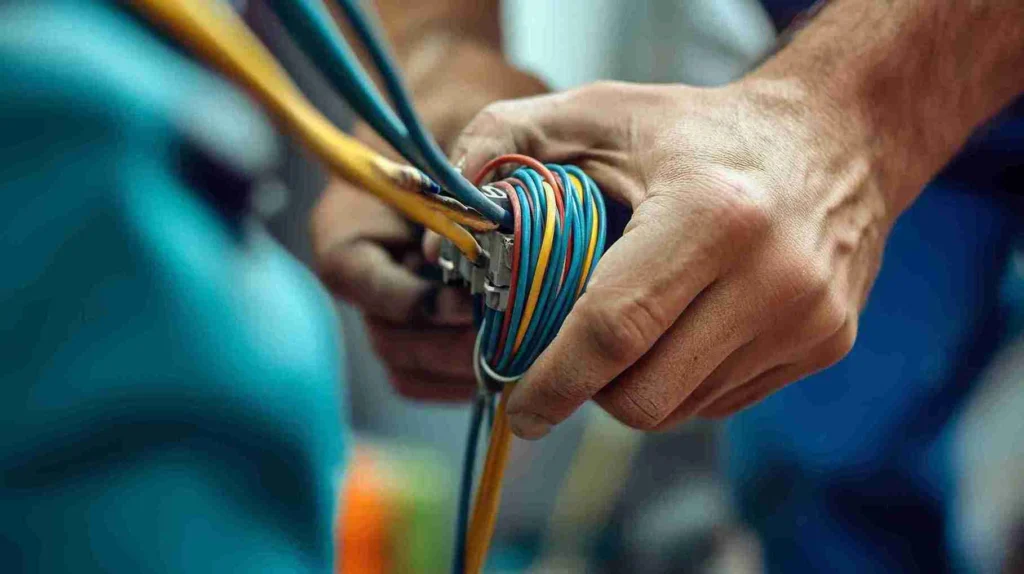
Look inside a car, a robot, or a network cabinet and you will find pairs of wires wound around each other in a neat spiral. That is wire twisting, and it is one of the simplest and most effective ways to control electrical noise. Done well, it protects signals, improves reliability, and keeps bundles tidy. Done poorly, it causes intermittent faults that are hard to trace. This guide explains how wire twisting works, the main methods, and the specifications that matter for manufacturers in the USA, especially when twisted pairs are built into custom Wire Harness and Cable Assemblies.
In this article
- 01What Is Wire Twisting?
- 02Why Wire Twisting Matters
- 03How Twisting Reduces Electrical Noise
- 04Key Wire Twisting Specifications
- 05Common Wire Twisting Methods
- 06Applications for Wire Twisting
- 07Choosing Wire and Insulation for Twisted Pairs
- 08Twisted Pair vs. Straight Parallel Wires
- 09Best Practices for Wire Twisting
- 10Testing and Quality Checks
- 11Common Mistakes to Avoid
- 12Frequently Asked Questions (FAQs)
- 13Conclusion
What Is Wire Twisting?
Wire twisting is the process of winding two or more insulated conductors around each other at a controlled lay length, which is the distance for one full twist. It differs from conductor stranding, where many small strands are grouped inside a single wire for flexibility. A twisted pair carries a signal and its return on two wires that run together, a principle used in patch cables and many control systems, and an Engineering Support review can confirm the right twist for your design.
Why Wire Twisting Matters
Twisting solves several problems at once, and in machines and enclosures it is often part of larger Electromechanical Assemblies where wiring must stay quiet and compact:
Interference affects both wires almost equally, so it cancels at a differential receiver.
The two wires carry opposite currents, and their fields are largely cancelled.
Different twist rates between neighboring pairs keep signals from leaking across.
Twisted pairs stay together, which makes routing and tie-down easier.
How Twisting Reduces Electrical Noise
Each twist swaps the position of the two wires, so noise picked up by one loop is opposed by the next. The tighter and more consistent the twist, the better the cancellation. For extra protection, a twisted pair can be wrapped in foil or braid, and proper termination of that shield is covered in our article on ground wire. Control panels built through Electronics Contract Manufacturing often use twisted shielded pairs for sensors and communication lines.
Key Wire Twisting Specifications
A drawing should define the twist clearly, and consistent materials from a reliable supply chain help the result stay repeatable. Specify these points:
Common values range from about half an inch to two inches, depending on wire size and application.
Left or right lay should be consistent within a pair or cable.
Uneven tension stretches wire and spoils the pitch.
Data cabling standards typically limit this to about half an inch or less.
Color codes or markings keep polarity correct.
Common Wire Twisting Methods
The right method depends on volume and precision. You can see finished twisted builds in our Product Gallery, and automated lines often start with a wire cutting machine that prepares exact lengths:
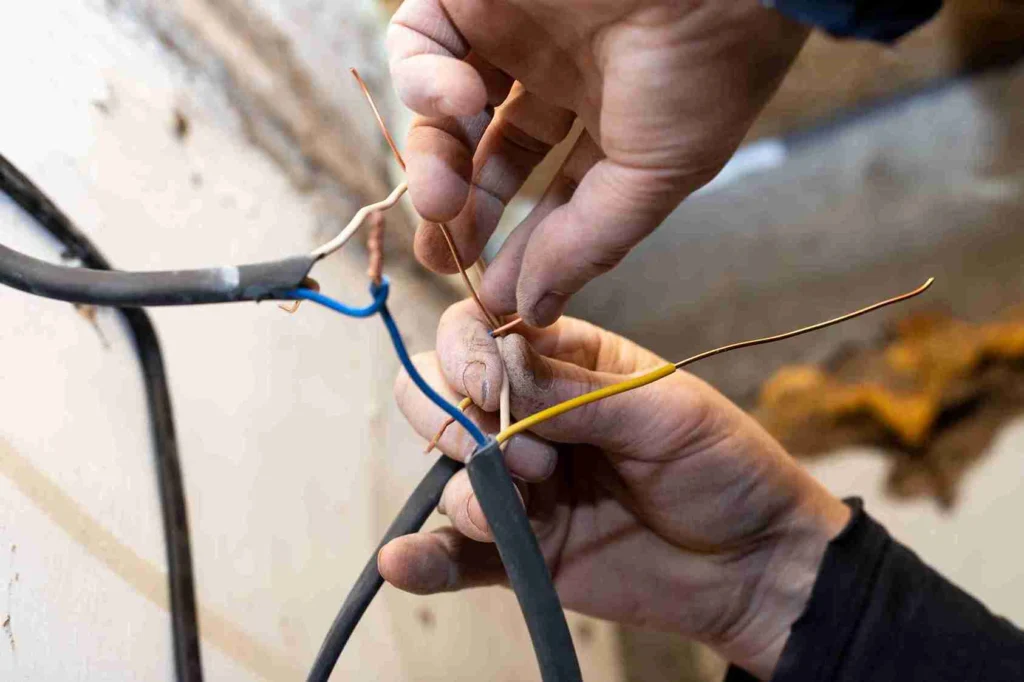
Suitable for repairs and one-off prototypes, but pitch varies from operator to operator.
A fixture holds the wires while a motor spins them, giving better consistency for short runs.
Cut, strip, and twist to a programmed pitch, ideal for repeat production.
Pairs are twisted during cable manufacturing for long continuous lengths.
Applications for Wire Twisting
Twisted conductors appear wherever signal quality matters, and you can explore related work across Our Services. Typical uses include:
CAN bus and sensor lines in noisy vehicles.
RS-485, encoder, and 4-20 mA sensor loops near motors and drives.
Ethernet pairs with controlled twist rates.
Balanced pairs that reject hum, as discussed in our high-end audio cable guide.
Low-noise signal wiring in sensitive equipment.
Choosing Wire and Insulation for Twisted Pairs
Wire gauge, stranding, and insulation affect how well a pair twists and how long it lasts. Fine stranded conductors twist easily and flex well, general-purpose insulation is covered in our PVC coated wire guide, and high-temperature or chemical areas may call for fluoropolymers such as FEP. Considering these choices early with an assembler that offers Custom Cable Assemblies helps meet both electrical and mechanical needs.
Twisted Pair vs. Straight Parallel Wires
Parallel wires are cheaper and faster to route, but they form a larger loop that picks up and radiates more noise. Twisted pairs cost slightly more to build and use a little more wire length, yet they hold up far better beside motors, drives, and radio sources. For low-speed power or simple on-off signals, parallel wiring may be enough, while sensors, bus, and communication lines usually justify twisting, especially inside enclosures built as Electromechanical Assemblies.
Best Practices for Wire Twisting
Inconsistent lay length weakens noise cancellation.
Excess tension or sharp edges can nick the jacket.
Keep twists as close to the connector as the design allows.
Use twisted pairs for differential signals and shielding for sensitive analog lines.
Route twisted pairs away from motor leads, such as a shielded VFD cable.
Use Quick Turn Cable Assembly to validate the twist before production.
Testing and Quality Checks
Finished twisted pairs should be checked for lay length, continuity, correct polarity, and visible insulation damage. Terminated ends should be pull tested where required, and our engineering team can help define the inspection plan for your assembly, including how lay length will be measured and what counts as an acceptable tolerance.
Common Mistakes to Avoid
Typical errors include twisting too loosely, leaving long untwisted tails, mixing pair polarity, and running twisted pairs beside power conductors. Planning these details early with a wire harness manufacturer avoids troubleshooting after installation.
Frequently Asked Questions (FAQs)
What is wire twisting?
Wire twisting is winding two or more insulated conductors around each other at a controlled lay length to reduce electrical noise and keep wires together.
Why are wires twisted together?
Twisting cancels interference and reduces radiation and crosstalk, which improves signal quality on differential and communication circuits.
What is lay length?
Lay length is the distance along the wire pair for one complete twist. Shorter lay lengths give tighter twists.
Can I twist wires by hand?
Yes, for repairs and prototypes, but hand twisting is inconsistent. For repeat builds, a machine or an assembler is better, and you can Request a Quote.
Where can I get custom twisted wire assemblies in the USA?
You can work with a domestic manufacturer such as Auctus Electro to build terminated, tested assemblies from your drawings.
Conclusion
Wire twisting is a low-cost way to improve signal integrity, but only when the lay length, direction, and terminations are controlled. Define the twist on your drawing, choose the right wire and insulation, and verify the finished assembly. When you need twisted pairs built into a reliable, tested product, Auctus Electro can help you move from specification to production.

Auctus Electro Assembly delivers a wide range of electrical solutions with fast turnaround times and reliable service. Wire harnesses, cable assemblies, box builds and electronics contract manufacturing from Rolling Meadows, IL.
Request a Quote