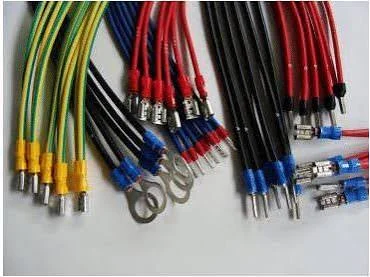
The wire harness industry quietly powers our modern world, connecting the electrical components in the 276 million vehicles traversing US roads today. When we look beneath the surface of cars, aircraft, or industrial equipment, wire harnesses serve as the critical nervous system, organizing what would otherwise be a chaotic web of cables into streamlined pathways that deliver essential electricity.
In fact, cable harnesses provide far more than mere organization. They enhance reliability, safety, and performance while significantly reducing installation time and maintenance costs. What is a cable harness exactly? It’s a carefully engineered assembly of wires and cables bound together to connect electrical components across various applications. Additionally, the purpose of a wiring harness extends beyond convenience—it protects vital connections from vibration, abrasion, and moisture, essentially safeguarding the operational integrity of everything from medical equipment to aerospace systems.
In this comprehensive guide, we’ll explore the quality standards that make or break production in the wire harness manufacturing industry, examining how these seemingly simple components have become indispensable across automotive, aerospace, medical, and industrial sectors. Whether you’re a manufacturer or simply curious about the backbone of modern technology, understanding these standards is crucial as we look toward 2025 and beyond.
In this article
- 01The Evolution of Wire Harness Standards
- 02From early automotive use to aerospace integration
- 03How historical labor costs shaped the wire harness industry
- 04The rise of global standardization efforts
- 05Key Components That Define Quality in Wire Harnesses
- 06Wires, cables, and connectors: what matters most
- 07Protective sheathing and insulation materials
- 08Testing protocols for durability and performance
- 09Global Standards That Shape the Industry
- 10ISO, IPC/WHMA-A-620, and other key certifications
- 11What global standards harmonization will mean for the wire harness industry
- 12Compliance challenges in international manufacturing
- 13Emerging Trends and Innovations in 2025
- 14Smart harness cables and IoT integration
- 15Lightweight materials for electric vehicles
- 16Automation in wire harness manufacturing
- 17Wire harness industry news today: what’s changing fast
- 18Conclusion
The Evolution of Wire Harness Standards
The wire harness industry traces its roots back to the 1920s, when engineers in automotive manufacturing discovered that binding wires and cables into organized bundles protected them against vibration, abrasions, and moisture. This practical innovation marked the beginning of what would become a critical component across multiple industries.
From early automotive use to aerospace integration
Before standardization, early wire harnesses were primarily used in automobiles, but soon found their way into household appliances like washing machines, refrigerators, and vacuum cleaners. This expansion occurred as manufacturers sought more efficient production methods for increasingly complex electrical systems.
Subsequently, the aerospace industry adopted wire harness technology, leading to more stringent requirements. Military standards like MIL-W-5088 emerged to govern aerospace wiring before transitioning to commercial standards around 25 years ago when the Society of Automotive Engineers took control, creating SAE-AS50881 in December 1992.
How historical labor costs shaped the wire harness industry
Despite technological advances, wire harness manufacturing remains largely a manual process due to the complexity of operations like:
- Routing wires through sleeves
- Taping with fabric tape at branch points
- Crimping terminals onto multiple wires
- Fastening strands with clamps or cable ties
These labor-intensive processes required tremendous skill and experience, making production time-consuming and costly. Accordingly, manufacturers began developing preassembled wire harnesses to reduce costs while maintaining quality
The rise of global standardization efforts
A major milestone occurred in 1998 when the Wire Harness Manufacturer’s Association (WHMA) partnered with IPC to develop the first comprehensive wire harness standards—IPC/WHMA-A-620. This document has evolved through multiple revisions, becoming an invaluable industry asset.
More recently, the push toward global harmonization has intensified. The introduction of ANSI UL 62275, which harmonizes with standards from Canada, Mexico, and Europe, established consistent classifications and performance ratings.
This harmonization enables manufacturers to:
- Produce one product for all markets
- Reduce compliance costs
- Bridge the gap between research and marketable products
Through these standardization efforts, the wire harness industry continues to advance, supporting innovations across automotive, aerospace, and industrial applications.
Key Components That Define Quality in Wire Harnesses
Quality in the wire harness industry hinges on several critical components working together to ensure reliability, safety, and performance. Understanding these elements is essential for both manufacturers and users alike.
Wires, cables, and connectors: what matters most
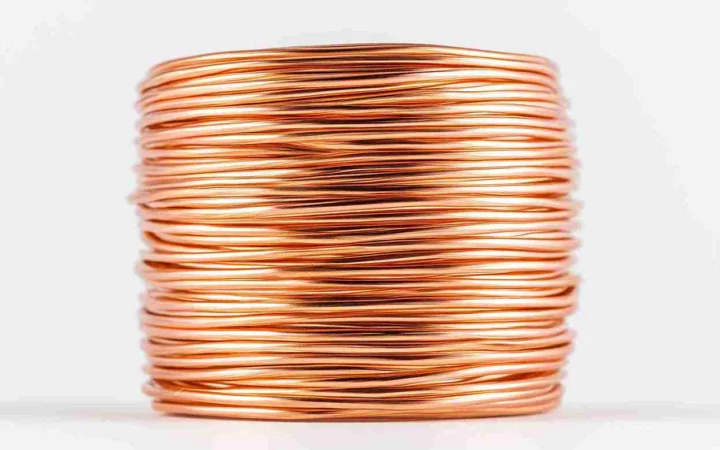
At the core of every wire harness are the conductors themselves, primarily made of copper or aluminum based on current capacity requirements. Copper remains the most versatile and widely used material, offering excellent conductivity and flexibility. For applications demanding greater breaking strength, copper-clad steel or copper alloys containing cadmium, chromium, or zirconium provide enhanced durability.
Conductor stranding significantly impacts performance—the higher the number and smaller the diameter of strands, the greater the flexibility. Furthermore, protective plating like tin helps prevent corrosion, whereas silver or nickel coatings allow conductors to function reliably at temperatures up to 200°C and 260°C respectively.
Connectors serve as the critical junction points throughout the harness. They come in various types including ring terminals, fork terminals, hook terminals, and quick disconnects, each designed for specific applications. Proper connector selection based on wire gage and expected current is essential, as poor connectors result in performance issues and potential safety hazards.
Protective sheathing and insulation materials
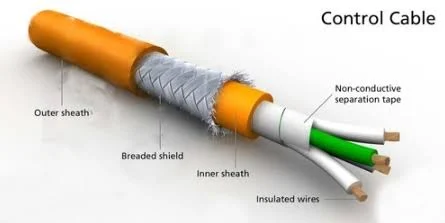
Insulation materials primarily include PVC, Teflon, and silicone, each offering different levels of protection against heat, moisture, and electrical interference. For extreme environments requiring high heat resistance, PTFE (Teflon) becomes necessary, withstanding temperatures that standard PVC cannot tolerate.
Protective coverings such as heat shrink tubing, braided sleeving, and conduits shield wires from environmental threats. Notably, aluminum reflective sleeving can protect harnesses near heat sources by reflecting thermal radiation.
Testing protocols for durability and performance
Rigorous testing ensures harness reliability across various conditions. Standard protocols include continuity testing to verify uninterrupted current flow, insulation resistance testing to prevent leakage currents, and high-potential (Hipot) testing to validate insulation under stress.
Mechanical testing examines physical robustness through pull tests on crimped connections and vibration testing to simulate real-world conditions. Environmental testing subjects harnesses to thermal cycling, salt spray, and humidity tests—particularly crucial for automotive and industrial applications.
Global Standards That Shape the Industry
Across the wire harness industry, standardization serves as the foundation for quality assurance and global market access. These carefully developed frameworks ensure safety, reliability, and interoperability in everything from consumer electronics to mission-critical systems.
ISO, IPC/WHMA-A-620, and other key certifications
The IPC/WHMA-A-620 standard stands as the industry’s primary rulebook, first published in 2002 as a joint effort between IPC and the Wiring Harness Manufacturer’s Association. Currently, over 20,000 application specialists have been certified to this standard. Other vital certifications include ISO 9001 (quality management), IATF 16949 (automotive), and AS9100 (aerospace).
These standards classify harnesses into different quality levels based on reliability requirements:
- Class 1 for general electronics
- Class 2 for extended performance industrial equipment
- Class 3 for high-reliability applications where failure risks are significantv
What global standards harmonization will mean for the wire harness industry
The introduction of ANSI UL 62275, which harmonizes with standards from Canada, Mexico, and Europe, represents a major advancement.
This alignment creates several advantages:
- Manufacturers can produce one product for multiple markets
- Compliance costs decrease significantly
- Time from research to marketable products shortens considerably
Moreover, harmonized standards facilitate international trade by removing technical barriers while increasing global market access.
Compliance challenges in international manufacturing
Throughout the industry, manufacturers face varying benchmarks for compliance testing and certifications.
Consequently, common challenges include:
- Inconsistent supplier material quality
- Documentation gaps during audits
- Manual testing errors and traceability issues
As regulatory environments tighten worldwide—from India’s BIS mandates to European REACH requirements—harnesses must demonstrate full compliance across materials, testing methods, and traceability systems.
Emerging Trends and Innovations in 2025
Technological innovations are reshaping wire harness manufacturing as we approach 2025, with four key trends dominating the landscape.
Smart harness cables and IoT integration
Wire harnesses are evolving from passive connection systems into active components with real-time monitoring capabilities. These smart harnesses incorporate sensors that collect valuable data about system performance and potential issues, enabling predictive maintenance strategies. In smart appliances, harnesses connect everything from temperature sensors to Wi-Fi modules, ensuring seamless IoT connectivity. For industrial applications, these intelligent systems require high reliability, high-speed data transmission capabilities, and enhanced security features.
Lightweight materials for electric vehicles
Weight reduction has become critical in electric vehicle design, where every gram impacts performance and efficiency. Aluminum conductors, with density only 1/3 that of copper, offer significant weight savings in both low-voltage and high-voltage harnesses. Manufacturers also utilize thin-wall construction and low-density materials like polypropylene and thermoplastic olefins to further reduce weight. Another approach involves increasing system voltage from 400V to 800V, allowing for thinner conductors while maintaining power delivery.
Automation in wire harness manufacturing
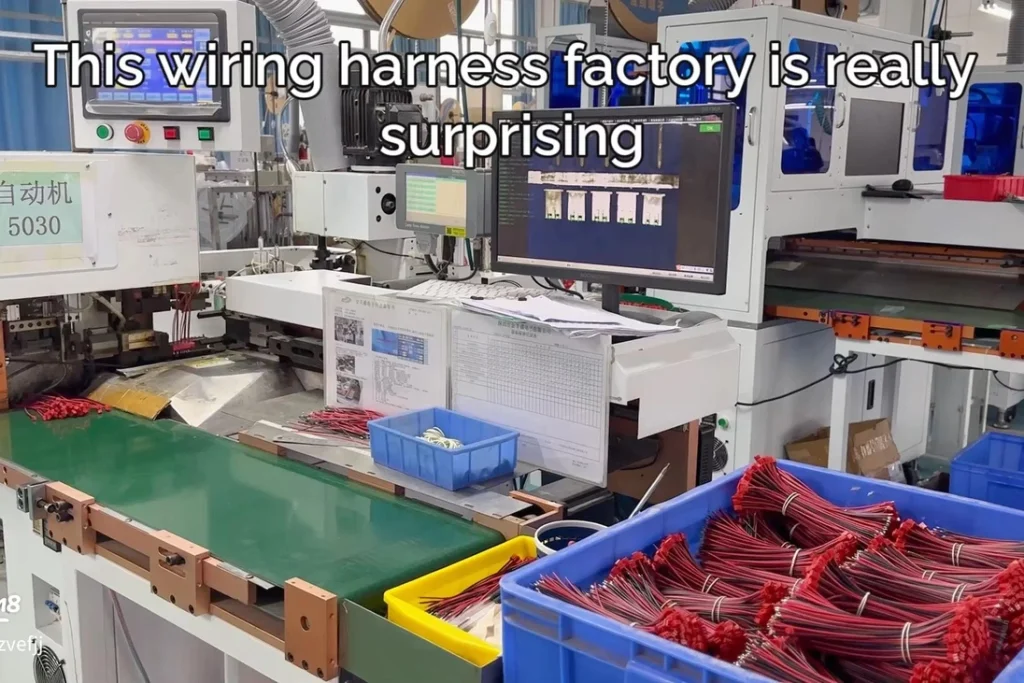
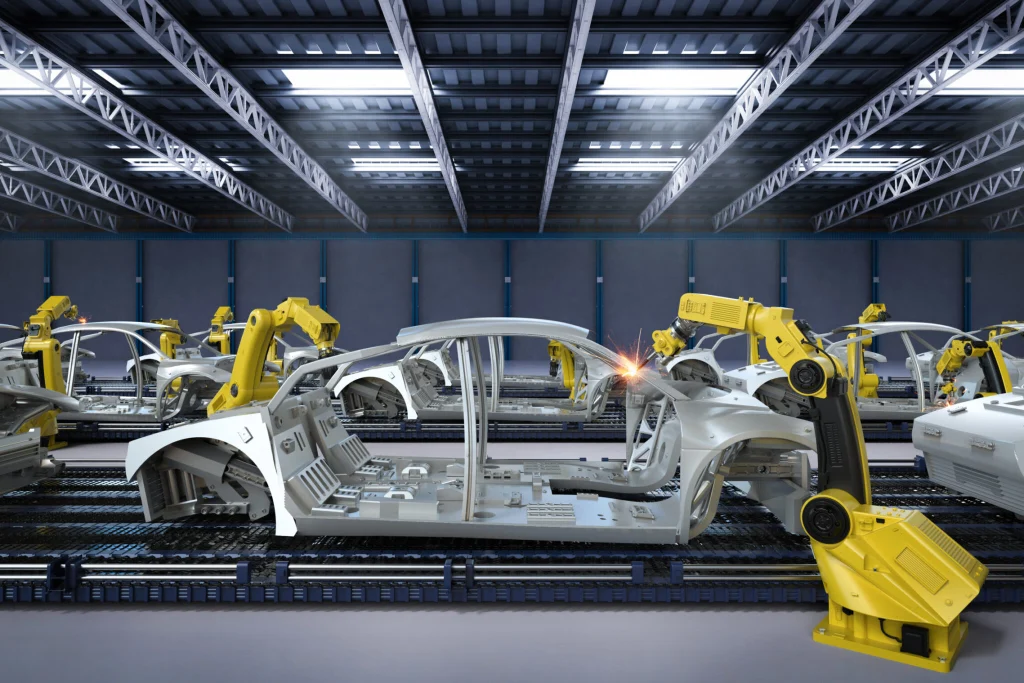
Automated systems are fundamentally changing production processes by eliminating human error while delivering consistent precision. Advanced CAD tools, 3D printing, and smart manufacturing systems streamline design and production. Collaborative robots work alongside human operators, combining strengths of both to optimize workflows. AI and machine learning algorithms analyze production data to uncover inefficiencies and suggest improvements.
Wire harness industry news today: what’s changing fast
Hirschmann Automotive recently opened a new factory in Oujda, Morocco, focusing initially on production and assembly of cables for electric vehicles. This facility will create 600 new jobs. In other developments, experts note that copper demand will increase over the next decade, primarily driven by autonomous and electric vehicle applications.
Conclusion
As we look toward 2025, quality standards undoubtedly remain the backbone of successful wire harness manufacturing. Throughout this exploration, we’ve seen how these seemingly simple components have transformed from basic wire bundles in 1920s vehicles to sophisticated, mission-critical systems powering everything from medical devices to aerospace technology.
Quality standards make all the difference between reliable performance and costly failure. The careful selection of conductors, proper connector matching, appropriate insulation materials, and comprehensive testing protocols collectively determine whether a harness will withstand real-world challenges. Additionally, adherence to global frameworks like IPC/WHMA-A-620 and ISO certifications ensures consistency across international markets.
The future of wire harness manufacturing looks particularly promising with several transformative trends taking shape. Smart harnesses with embedded sensors will enable predictive maintenance and seamless IoT integration. Lightweight materials will continue revolutionizing electric vehicle design. Likewise, automation technologies will enhance precision while reducing production times.
Wire harnesses might operate behind the scenes, yet they represent the critical infrastructure connecting our technological world. Their reliable performance depends entirely on rigorous quality standards that manufacturers must prioritize above all else. Companies that embrace these standards while adapting to emerging innovations will certainly thrive in this essential industry that quietly powers our modern existence.

Auctus Electro Assembly delivers a wide range of electrical solutions with fast turnaround times and reliable service. Wire harnesses, cable assemblies, box builds and electronics contract manufacturing from Rolling Meadows, IL.
Request a Quote