- 3876 Industrial Ave, Rolling Meadows, IL 60008
- Info@auctuselectro.com

- 3876 Industrial Ave, Rolling Meadows, IL 60008
- Info@auctuselectro.com
Low Voltage Wire
- Home
- Low Voltage Wire
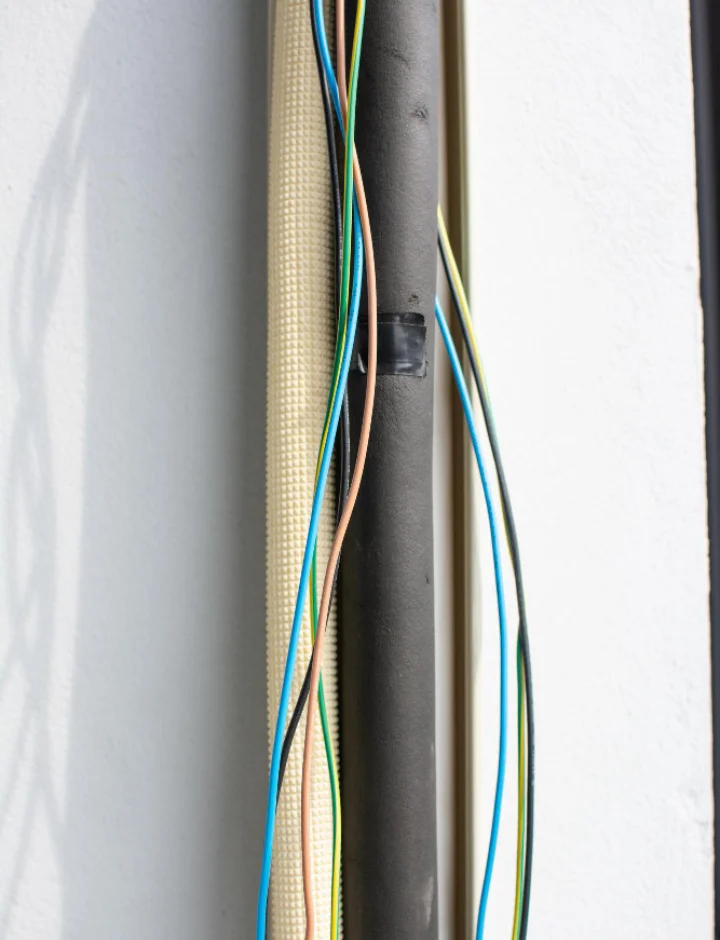
The Comprehensive Guide to Low Voltage Wire: Sizing, Shielding, Code Compliance, and Installation
In modern architectural engineering and building automation, Electrical systems are divided into distinct operating tiers. While line-voltage wiring handles high-power loads like HVAC compressors, water heaters, and general wall outlets, low voltage wire powers the underlying digital brain and sensory networks of residential homes, commercial complexes, and industrial facilities. From smart thermostats and automated security controls to high-fidelity audio networks and Power over Ethernet (POE) infrastructure, serves as the indispensable foundation for modern automation and communication. Factors like electrical resistance, conductor metallurgy, fire safety codes, and signal interference directly determine whether a system performs reliably or suffers from unexpected power drops and data corruption.
Conductor Metallurgy: Bare Copper vs. Copper-Clad Aluminium (CCA)
When specifying low voltage wire, conductor material profoundly impacts long-term reliability and physical performance.
The True Engineering Cost of a Cheap Cable Alternative
Partnering with a trusted contract manufacturing house helps your organization optimize procurement costs without sacrificing baseline system safety. Every production run adheres to strict domestic manufacturing standards to guarantee absolute electrical performance.
Solid Bare Copper
Solid bare copper is the gold standard for permanent installations. It offers superior electrical conductivity, low internal resistance, high tensile strength, and minimal oxidation over time. It stands up to thermal cycles, Mechanical pulling stress, and repeated terminal screw clamping without degrading.
Tinned Copper
Tinned copper consists of standard bare copper coated with a microscopic layer of tin. It is highly recommended for humid, marine, or chemical environments where raw copper would otherwise corrode and build terminal resistance.
Copper-Clad Aluminum (CCA)
Copper-clad aluminum features an aluminum core surrounded by a thin exterior layer of copper. While CCA lowers upfront material costs, it introduces severe Engineering drawbacks:
- Higher Resistance: Aluminum exhibits roughly 60% higher electrical resistance than pure copper, generating greater heat and higher voltage drop for the same wire gauge.
- Brittleness and Fatigue: CCA breaks easily under bending stress during installation or inside terminal blocks.
- Corrosion Risk: When exposed to moisture, galvanic action between copper and aluminum degrades the core.
- POE Hazard: Under Power over Ethernet (POE) loads, high resistance in CCA Cables leads to excessive heat build up and potential fire hazards.
Fire Safety, Jacketing, and NEC Code Ratings
Low voltage wire insulation must comply with National Electrical Code (NEC) Article 725 and local building codes to ensure flame resistance and prevent toxic smoke distribution during a structural fire.
- Plenum Rated (CMP / CL2P / CL3P): Designed for installation inside environmental air plenums (the space above drop ceilings or below raised floors used for HVAC air return). Constructed with fluoropolymer jackets, plenum-rated low voltage Wire self-extinguishes quickly and releases minimal toxic fumes when subjected to extreme heat.
- Riser Rated (CMR / CL2R / CL3R): Formulated for vertical cable runs extending through floor penetrations or utility shafts between multiple stories. Riser jackets prevent flames from traveling upward from floor to floor.
- General Purpose / In-Wall (CL2 / CL3 / CM): Approved for residential in-wall and in-ceiling runs within a single story. Meets standard flame-retardant test requirements.
- Direct Burial (DB / LV-Direct): Enclosed in a heavy, moisture-impermeable jacket (often polyethylene or thick UV-stabilized PVC). Engineered to endure continuous moisture, soil acids, physical crushing, and direct Contact with dirt without requiring conduit protection.
Shielding Strategies: Managing Interference in Low Voltage Systems
Because low voltage signals carry delicate analog or high-frequency digital information, nearby electrical noise can distort audio, corrupt sensor data, or trigger false alarm inputs.
- Unshielded Low Voltage Wire (UTP): Relies on geometric twisting of conductor pairs to reject common-mode electromagnetic noise. Ideal for general residential thermostat controls, basic alarm contact sensors, and clean indoor networking environments.
- Foil Shielded Low Voltage Wire (F/UTP): Encloses the conductor bundle in an aluminum-backed Mylar foil wrap accompanied by a tinned copper drain wire. Provides 100% physical coverage against high-frequency radio frequency interference (RFI) emitted by wireless arrays, switching power supplies, and digital ballasts.
- Braid Shielded Low Voltage Wire (S/UTP): Features a woven mesh of fine copper strands around the core. Offers high physical durability, low Electrical resistance, and superior protection against low-frequency electromagnetic interference (EMI) generated by heavy electric motors, transformers, and industrial pumps.
- Combination Foil/Braid Shielding: Combines foil and braid layers for comprehensive protection across the entire noise frequency spectrum—essential in manufacturing plants and broadcast studios.
Advanced Layout and Installation Best Practices
Proper installation technique is just as vital as cable selection when building low voltage networks.
Enforce Voltage Class Separation
Never run low voltage wire through the same drilled framing holes, raceways, or junction boxes as 120V/240V AC power lines. Maintain a parallel clearance distance of at least 6 to 12 inches to prevent electromagnetic noise coupling and high-voltage arc-over hazards. When low voltage lines must cross AC power lines, route them at a 90-degree right angle.
Observe Minimum Bend Radius
Never kink or bend a low voltage wire tighter than four times its outer diameter (or up to eight times for high-speed data Cables). Sharp bends alter conductor geometry, increase local resistance, and degrade digital signal return loss.
Use Proper Fasteners
Avoid driven metal staples that crush insulation. Secure cables using broad, insulated staples, bridle rings, or J-hooks spaced every 4 to 5 feet along structural framing.
- 100% Automated Continuity Verification: Eliminates open circuits, pin swaps, and mis wired connections before shipment.
- High-Potential (Hipot) Insulation Audits: Confirms outer jacket insulation withstands high voltage spikes without breaking down.
- Micro-Resistance Conductor Diagnostics: Detects internal strand fractures and impure copper alloys instantly.
- Flexibility and Tensile Strain Tests: Ensures terminal crimps retain physical strength under continuous pulling forces.
Match Wiring Topology to System Needs
Building an efficient facility requires balancing budget constraints with long-term mechanical durability. To optimize your hardware investments, technical teams’ pair engineered wiring solutions with a complete Industrial Cabling Architecture. This integrated approach delivers a drop-in utility infrastructure capable of carrying high-current power and high-speed data cleanly. Sourcing these assemblies from a single domestic supplier ensures all termination components fit seamlessly.
- Hub-and-Spoke (Star Topology): Run dedicated home-run from a central control Panel out to each individual sensor, camera, or speaker. This facilitates easy isolation, testing, and troubleshooting.
- Daisy Chain (Bus Topology): Loop a single sequentially from fixture to fixture (common in landscape lighting or RS-485 control loops). This requires careful voltage drop planning across the entire length of the loop.
Frequently Asked Questions (FAQs)
1.What is the maximum voltage classified as low voltage?
Under National Electrical Code (NEC) guidelines, low voltage systems operate at 50 volts or less. Common low voltage systems run at 12V, 24V, or 48V AC/DC.
2.Can low voltage wire be installed inside walls without conduit?
Yes, provided the cable carries an appropriate in-wall fire safety rating (such as CL2, CL3, CMR, or CMP). Standard non-rated lamp cord or temporary zip cord should never be run inside finished walls.
3.How do I prevent lights from dimming at the end of a low voltage wire run?
To prevent dimming on long outdoor 12V runs, increase the conductor gauge (e.g., switch from 16 AWG to 12 AWG), split the run into multiple shorter home-runs, or utilize a T-tap wiring topology rather than a linear daisy chain.
4.Is shielding always required for low voltage security wiring?
No. Unshielded wire works well for basic door contact sensors and simple relays. However, shielded is necessary when running security lines near high-voltage lines, fluorescent lighting, or heavy industrial machinery to prevent false alarms.
Conclusion
Low voltage wire forms the fundamental nervous system of modern residential, commercial, and industrial structures. Beyond simply selecting a cable based on conductor count, ensuring system longevity requires a thorough evaluation of voltage drop formulas, conductor metallurgy, fire safety ratings, and shielding configurations. By choosing solid copper conductors, enforcing physical separation from high-voltage lines, and matching cable jacket ratings to environmental conditions, installers can guarantee a safe, reliable, and high-performing low voltage infrastructure.
Go To Top