
Precision mechanical components form the core of modern industrial machinery, medical devices, and automotive systems. When engineers design custom clips, springs, linkages, or structural brackets, standard off-the-shelf hardware rarely satisfies exact tolerance requirements. Consequently, partnering with experienced Wire Form Manufacturers is essential for bringing custom bent wire designs to market across the USA. Specialized production facilities utilize high-speed CNC wire bending machinery to shape raw metal wire into complex three-dimensional geometries. Therefore, selecting an expert manufacturing partner ensures high repeatable accuracy, long fatigue life, and structural reliability for your production components.
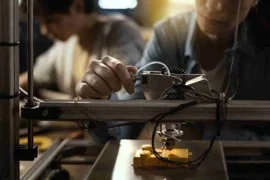
Traditional wire forming relied heavily on hard tooling and custom dies, which increased upfront prototyping costs significantly. Furthermore, modifying design required expensive tooling rework that delayed project schedules by several weeks. However, top-tier wire form manufacturers utilize advanced multi-axis CNC wire benders that eliminate hard tooling requirements entirely. These automated systems feed, bend, and cut wire directly from digital CAD files with extreme precision. Consequently, your engineering team can test prototypes rapidly and move into full production without heavy upfront capital investments.
Transforming straight spooled wire into high-durability mechanical parts requires deep expertise in metallurgy, spring-back calculations, and stress points. Understanding these technical factors helps procurement managers select the right partner for their application.
First, selecting the correct raw material directly dictates how a component performs under constant mechanical stress. Stainless steel (302, 304, 316) offers excellent corrosion resistance for medical or marine environments. Alternatively, high-carbon spring steel delivers high tensile strength for heavy-load industrial clips. Professional manufacturers analyze operating temperatures, chemical exposure, and cycle counts before recommending raw materials. Securing this level of material analysis becomes effortless when you collaborate with an experienced Hardware Component Team.
Second, every metal wire possesses elasticity that causes it to unbend slightly after leaving a forming die or CNC pin. This physical behavior is known as spring-back. Top-tier manufacturers utilize computerized angle-sensing heads that measure and compensate for material spring-back in real time. Furthermore, pairing precise bending angles with post-forming heat treatment guarantees your Custom Electromechanical Assemblies maintain exact dimensional tolerances across millions of operational cycles.
Forming wire geometry is only the first step in creating a complete functional component. High-quality production facilities offer comprehensive secondary processing under one roof to streamline supply chains.
Building a complete commercial device requires linking formed wire brackets, grounding clips, and structural stays into primary equipment frames. To simplify this assembly process, integration teams connect formed metal components directly with a complete Industrial Build Framework. This unified approach speeds up final unit assembly and prevents mechanical fitment errors during mass production.
Modern OEMs increasingly prefer single-source manufacturing partners capable of handling both mechanical wire forming and complex electronic integration. Sourcing through one full-service provider reduces shipping logistics, minimizes supplier risks, and shortens total production timelines.
To ensure complete system functionality, formed wire contacts and battery clips must interface cleanly with main circuit boards. Linking your custom wire shapes with high-quality Printed Board Manufacturing prevents poor contact pressure and intermittent electrical faults. Consequently, your electronic modules operate reliably even under severe continuous vibration. This precision fit guards your sensitive logic circuits against physical disconnects.
Finally, your internal wire forms, structural linkages, and sensitive electronics require a durable physical cabinet to protect against harsh external environments. Leading wire form manufacturers offer full-service metalwork alongside specialized Technical Engineering Services. This end-of-the-end service allows you to source custom-formed wire parts, electronic controls, and weather-proof NEMA enclosures from a single trusted partner like Auctus Electro.
1.What wire diameter ranges can professional wire form manufacturers handle?
Most industrial manufacturers work with wire diameters ranging from ultra-fine 0.010 inches (0.25 mm) up to heavy-duty 0.625 inches (15.8 mm) or thicker, depending on the bending machinery capacity.
2.What is the difference between custom wire forming and wire stamping?
Wire forming uses CNC benders to bend wire along multiple axes without custom dies. Wire stamping relies on dedicated punch presses and hard tooling, which is better suited for flat metal strips or ultra-high volume simple shapes.
3.Why is heat treating necessary after forming spring wire?
Forming alters the internal grain structure of the wire. Heat treating (or stress relieving) resets these internal stresses, allowing the part to retain its shape and elasticity without deforming under repeated loads.
4.Can wire forms be manufactured with flattened or threaded sections?
Yes. CNC wire forming centers can integrate inline flattening, piercing, swaging, heading, and threading operations before or after the bending process.
5.How do I choose the best wire form manufacturer in the USA for my project?
Look for manufacturers with ISO 9001 certification, multi-axis CNC capability, in-house secondary processing, and total quality inspection systems like optical 3D measuring equipment.
Finding the right wire form manufacturers is a strategic choice that impacts your product’s durability, manufacturing cost, and time-to-market. By prioritizing automated multi-axis CNC forming, precise spring-back control, and comprehensive secondary finishing operations, you ensure your mechanical parts perform flawlessly. Full-service partners like Auctus Electro bring the technical precision and integrated manufacturing capabilities needed to execute complex custom wire designs smoothly. Partnering with an expert domestic manufacturer ensures your equipment operates with absolute structural integrity, safety, and efficiency.