- 3876 Industrial Ave, Rolling Meadows, IL 60008
- Info@auctuselectro.com

- 3876 Industrial Ave, Rolling Meadows, IL 60008
- Info@auctuselectro.com
RF Cable Assemblies
- Home
- RF Cable Assemblies
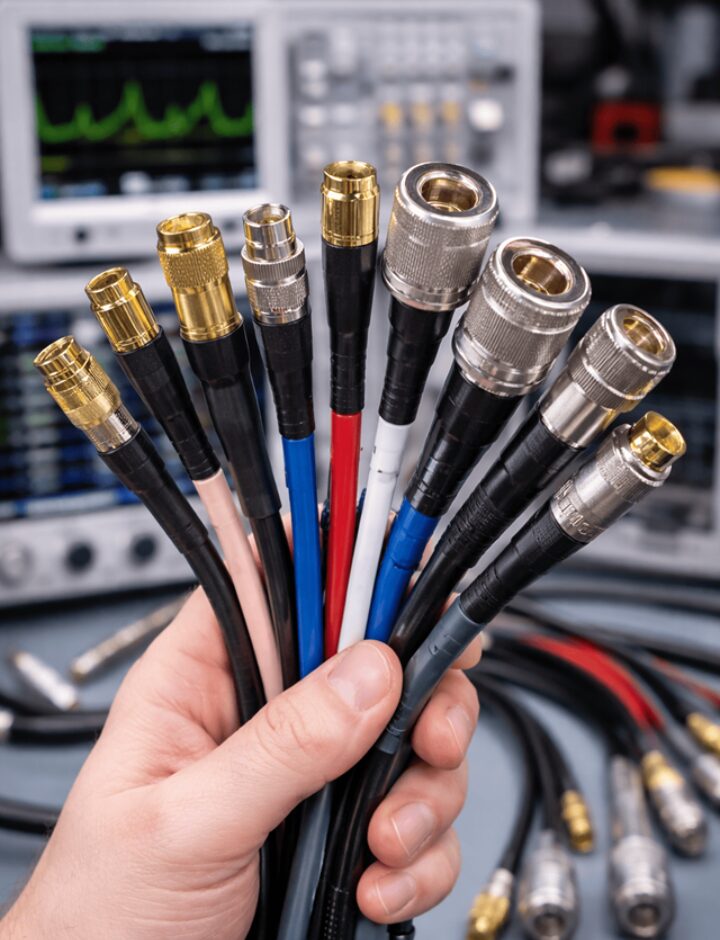
RF Cable Assemblies : The Backbone of Modern Wireless Communication
In today’s hyper-connected world, reliable signal transmission is everything. From military communication systems to medical devices and 5G infrastructure, one component plays a critical but often invisible role: RF cable assemblies.
At Auctus Electro Assembly , we specialize in precision-engineered RF cable assemblies that ensure minimal sigcablenal loss, maximum durability, and flawless performance. With over 60 years of combined industry experience, we understand what it takes to build assemblies that perform reliably in the most demanding environments.
What Are RF Cable Assemblies?
RF (Radio Frequency) cable assemblies are specialized interconnect solutions designed to transmit high-frequency signals between electronic components. Unlike standard wiring, these assemblies are engineered to maintain signal integrity over specific distances while rejecting electromagnetic interference (EMI).
A typical RF cable assembly consists of three main parts:
- Inner Conductor: Carries the signal (solid or stranded copper).
- Dielectric Insulator: Maintains spacing between conductors.
- Outer Shield & Jacket: Blocks external noise and protects against physical damage.
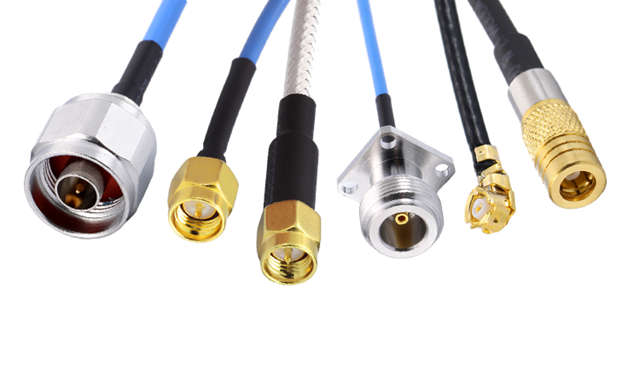
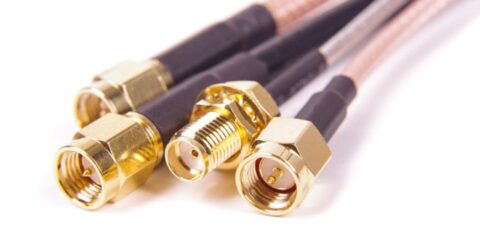
Common connector types include SMA, BNC, TNC, N-type, and MCX. The right combination of cable and connector determines everything from signal strength to installation flexibility.
Why Quality Matters in RF Cable Assemblies
A poorly constructed RF cable assembly can destroy an otherwise perfect system. Here is what happens when quality is compromised:
Problem | Cause | Consequence |
Signal loss | Poor impedance matching | Weak reception, dropped connections |
Interference | Inadequate shielding | Data corruption, noisy audio/video |
Intermittent failure | Weak solder joints | System crashes, costly downtime |
Early cracking | Low-grade jacket material | Moisture ingress, short circuits |
At Auctus Electro Assembly, we eliminate these risks through strict quality control and advanced testing. Every assembly we produce undergoes VSWR (Voltage Standing Wave Ratio) testing, insertion loss measurement, and visual inspection to ensure it meets or exceeds industry standards.
Common Applications of RF Cable Assemblies
Because of their versatility, RF cable assemblies appear in nearly every industry that relies on wireless or high-speed communication:
- Telecommunications: Connecting antennas to base stations, 5G small cells, and satellite receivers.
- Medical Devices: MRI machines, patient monitoring systems, and wireless surgical tools.
- Military & Defense: Radar systems, secure communication devices, and drone control links.
- Automotive: GPS antennas, keyless entry systems, and vehicle-to-vehicle (V2V) communication.
- Industrial IoT: Factory automation sensors, remote monitoring equipment, and robotics.
Whatever your application, Auctus Electro Assembly provides custom solutions tailored to your exact frequency, length, and environmental requirements.
How to Choose the Right RF Cable Assembly for Your Project
Selecting the correct RF cable assembly requires answering four key questions:
1.What Frequency Range Do You Need?
Lower frequencies (up to 3 GHz) work well with RG58 or RG316 cables. Higher frequencies (up to 18 GHz or more) require low-loss options like RG400 or semi-rigid assemblies.
2.What Is Your Operating Environment?
Indoor use? Standard PVC jackets work fine. Outdoor or industrial? You will need UV-resistant, waterproof, or flame-retardant jacketing.
3.How Long Does the Cable Need to Be?
Longer runs introduce more signal loss. For distances over 10 feet at high frequencies, consider a thicker, low-loss cable or add an inline amplifier.
4. What Connectors Are Compatible?
Check your equipment ports. Mixing 50-ohm and 75-ohm components creates impedance mismatches that kill performance. Stick to one standard.
Pro Tip from Auctus: When in doubt, order a sample assembly first. Test it in your actual operating conditions before committing to large volumes.
Frequently Asked Questions (FAQs)
Q1: What is the difference between 50-ohm and 75-ohm RF cable assemblies?
50-ohm is standard for transmitters and two-way radio (higher power). 75-ohm is for video and TV signals (lower loss). Never mix them.
Q2: How long do RF cable assemblies typically last?
Indoor: 5–10 years. Outdoor: 3–7 years depending on UV exposure. Premium assemblies with Teflon jackets last longer.
Q3: Can Auctus build custom length RF assemblies?
Yes. We offer any length from 2 inches to 100+ feet with your choice of connectors and jacketing.
Q4: What testing do you perform on each assembly?
100% VSWR, insertion loss, and continuity testing. We also provide test reports upon request.
Q5: Do you offer prototyping services?
Absolutely. We build low-volume prototypes so you can validate performance before mass production.
Conclusion
Your system is only as reliable as its weakest connection. Investing in high-quality RF cable Connector protects your signal integrity, reduces downtime, and extends equipment life. But quality doesn’t happen by accident—it requires expertise, precision, and rigorous testing.
Website : https://auctuselectro.com/
Go To Top