- 3876 Industrial Ave, Rolling Meadows, IL 60008
- Info@auctuselectro.com

- 3876 Industrial Ave, Rolling Meadows, IL 60008
- Info@auctuselectro.com
Factory-Ready Ethernet
- Home
- Factory-Ready Ethernet

Why Your Networking Cable Harness Needs to Survive the Factory Floor
That is the difference between commercial Ethernet and Industrial Ethernet. In an office, a dropped connection is an annoyance. On a factory floor, it is downtime—and downtime costs thousands of dollars per hour.
At Auctus Electro Assembly, we build networking cable harnesses for environments where “reboot the router” is not an option. Here is what makes industrial cabling different, and why your manufacturing operation cannot afford to use commercial-grade components.
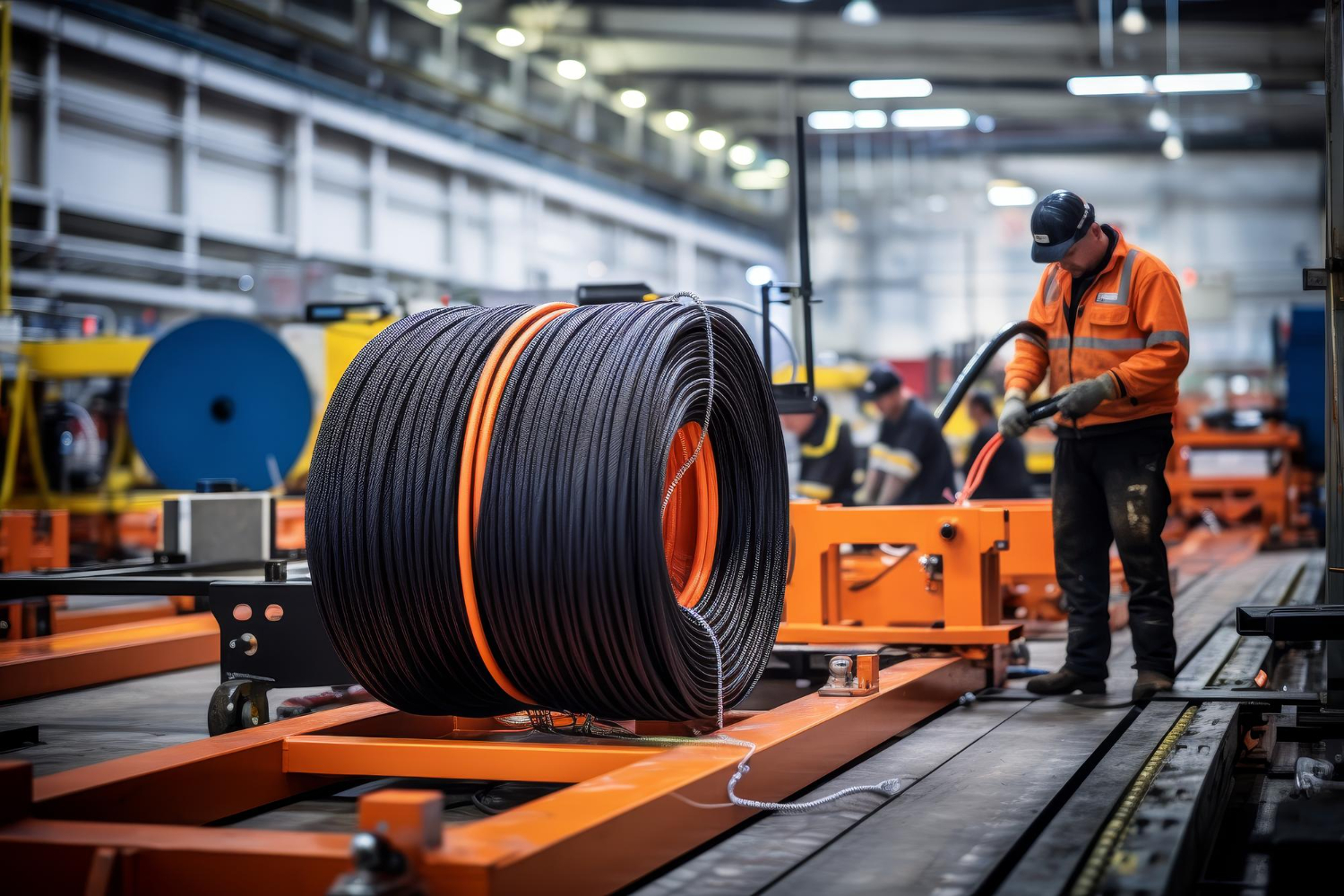
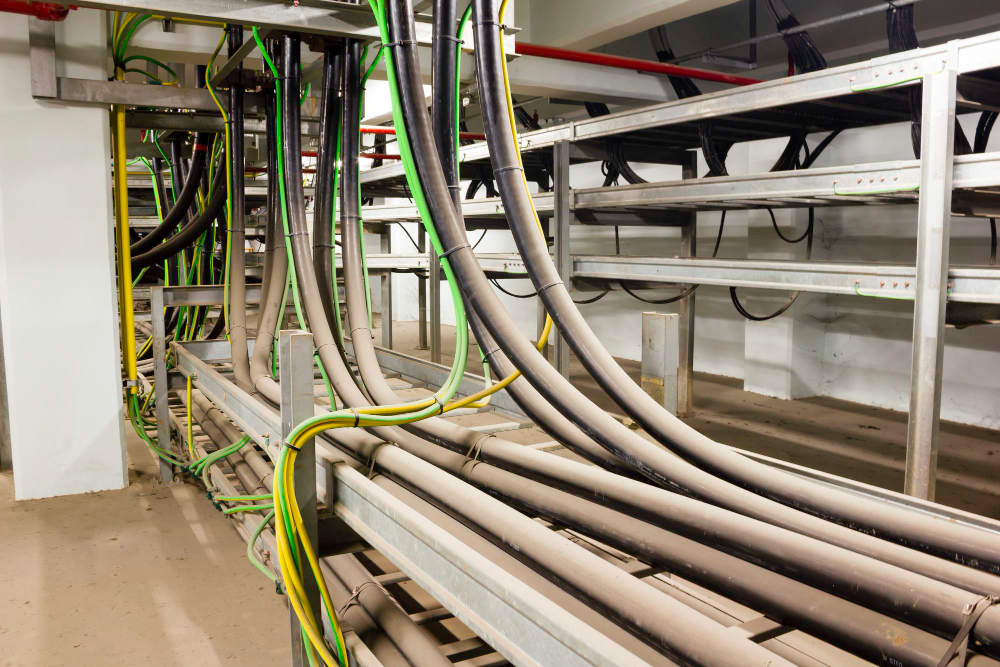
The Four Killers of Factory Floor Cables
Industrial environments do not just use cables. They attack them. Every day.
1. Physical Abuse: Vibration, Flexing, and Impact
Robotic arms bend. Linear actuators slide. Operators walk. Forklifts roll. In a factory, nothing stays still.
Standard networking cables use solid conductors. They are cheap and perform well in walls—but they fatigue and break under repeated flexing. Industrial Ethernet harnesses use stranded conductors with higher strand counts, allowing them to flex millions of times without failure.
2. Chemical Exposure: Oils, Coolants, and Solvents
Cutting fluid. Hydraulic oil. Cleaning solvents. These are not occasional spills—they are airborne mist settling on every surface.
Standard PVC jackets soften, swell, or crack when exposed to industrial fluids. Industrial Ethernet harnesses use oil-resistant jacketing materials like PUR (polyurethane) or TPE that chemically resist degradation.
3. Temperature Extremes: Hot and Cold
Near ovens? In unheated warehouses? On moving equipment that generates heat? Factory floors see temperature swings that would destroy commercial electronics.
Industrial Ethernet harnesses are rated for extended temperature ranges—typically -40°C to +80°C or wider. The insulation, jacket, and connectors are all specified to maintain performance outside the office comfort zone.
4. Electromagnetic Interference (EMI)
Motors. Drives. Welders. High-voltage lines. Factories are electrically noisy environments. That noise can corrupt data signals, causing packet loss, retransmissions, and unpredictable network behavior.
Industrial Ethernet harnesses use superior shielding often a combination of foil and braid to protect signal integrity. They also maintain controlled impedance to prevent reflections and data errors.
What Industrial Ethernet Cable Looks Like
An Industrial Ethernet harness is not a Cat6 cable in a different color jacket. It is a completely different engineered assembly.
| Feature | Commercial Grade | Industrial Grade |
| Conductor | Solid (breaks under flex) | Stranded (millions of flex cycles) |
| Jacket | PVC (oil sensitive) | PUR or TPE (chemical resistant) |
| Shielding | None or minimal | Foil + braid (EMI protection) |
| Temperature | -20°C to +60°C | -40°C to +80°C+ |
| Connector | Standard plastic | Metal, overmolded, strain-relieved |
| Flex rating | None | Millions of cycles (torsion/bend) |
Profinet, EtherCAT, and Ethernet/IP: Matching the Harness to the Protocol
Industrial Ethernet is not one standard it is several, each with specific physical layer requirements.
- Profinet: Often requires Cat5e or higher with robust shielding. Rugged RJ45 or M12 connectors common.
- EtherCAT: Uses standard Ethernet physical layers but demands low latency and high reliability in motion control applications.
- EtherNet/IP: The industrial adaptation of commercial Ethernet, often deployed with ruggedized connectors and heavy-duty cabling.
Your cable harness must match not just the data rate, but the mechanical and environmental demands of the protocol and application.
Why Pre-Tested Matters More in Industrial Environments
In an office, you plug in a cable and hope. If it fails, you try another.
In a factory, you cannot “try another” when a robot is waiting. Every cable must work the first time every time.
Industrial Ethernet harnesses from Auctus undergo:
- 100% continuity testing (every pin, every conductor)
- Hi-pot testing (dielectric withstand, no insulation breakdown)
- Shield continuity verification
- Return loss and insertion loss testing (for high-speed data integrity)
- Visual inspection of overmolding and connector seating
Auctus Electro Assembly: Built for the Factory Floor
We have served industrial clients for over 60 years. We understand what happens when a cable meets cutting oil, welding spatter, and continuous motion because we have seen it.
Our Industrial Ethernet harnesses feature:
- High-strand conductors for flex life
- Foil + braid shielding for EMI rejection
- Overmolded connectors with IP67 sealing
- 100% factory testing with full documentation
- Custom lengths, colors, and labeling
Your Move
If you are specifying Ethernet cabling for a factory floor, ask your current supplier:
1.What is the flex life rating of this assembly?
2.What chemicals is the jacket resistant to?
3.How is the connector sealed against contamination?
4.What testing is performed before shipment?
5.Can you provide documentation for each assembly?
If the answers are vague, your risk is real.
Ready to specify Industrial Ethernet harnesses that survive the factory floor?
Contact Auctus Electro Assembly today.

Go To Top