
Did you know that many aircraft, automobiles, and spacecraft contain masses of cables and wires that would stretch over several kilometers if fully extended? A cable assembly organizes these complex networks of wires into structured, manageable systems that are essential for modern engineering applications.
When working with electrical systems, we often need to secure wires against vibrations, abrasions, and moisture. Cable assemblies and harness cables provide significant advantages over loose wiring by keeping individual cables well organized, which simplifies their use, installation, and maintenance. The cable harness assembly process creates durable structures that save space while protecting the integrity of each component. As engineers, we see these wire harness assemblies commonly used across multiple industries, including automotive, medical, military, aerospace, and telecommunications.
In this article, we’ll explore the fundamentals of cable assemblies that every engineer should understand, from basic definitions to manufacturing processes and industry standards that ensure reliability in your projects.
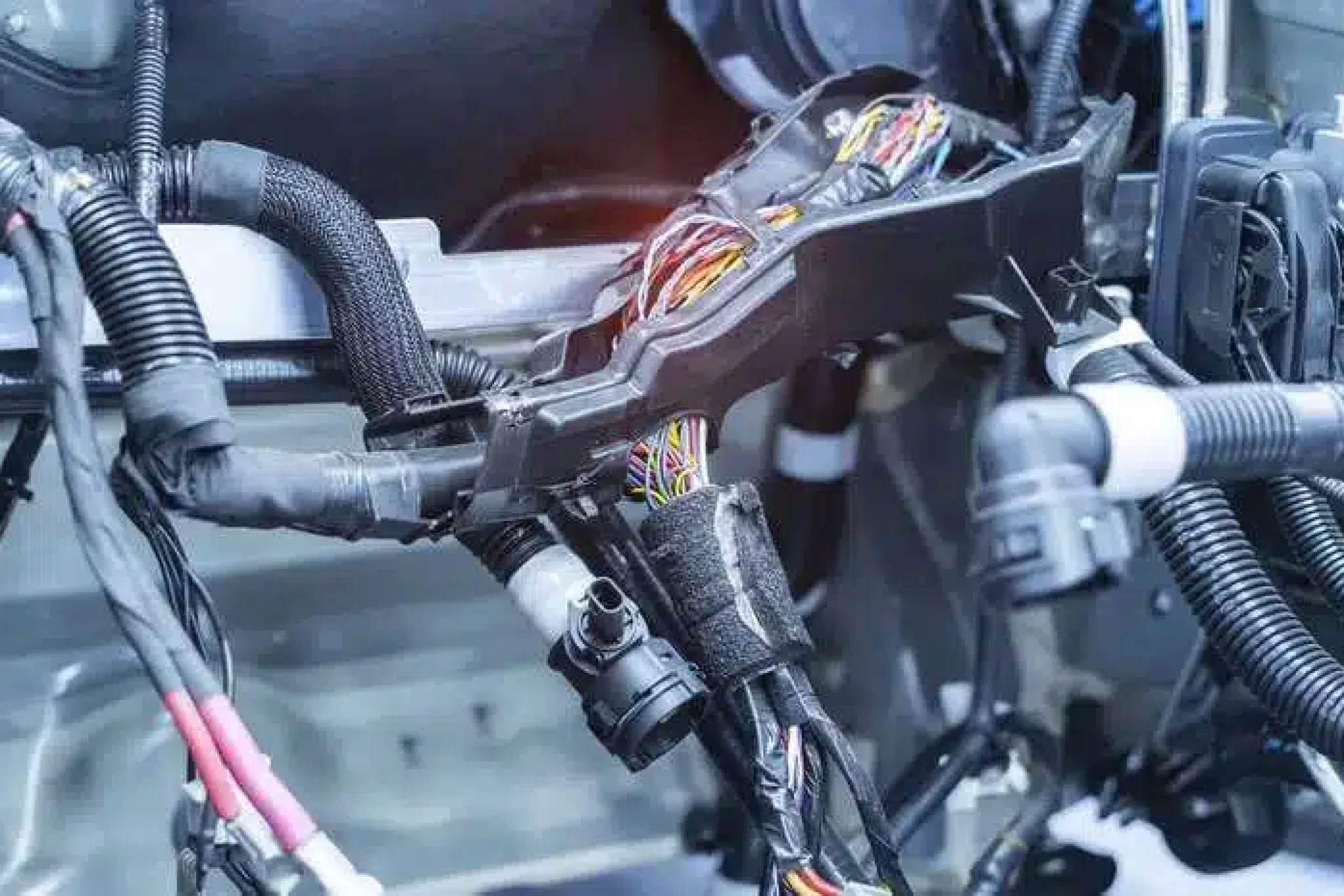
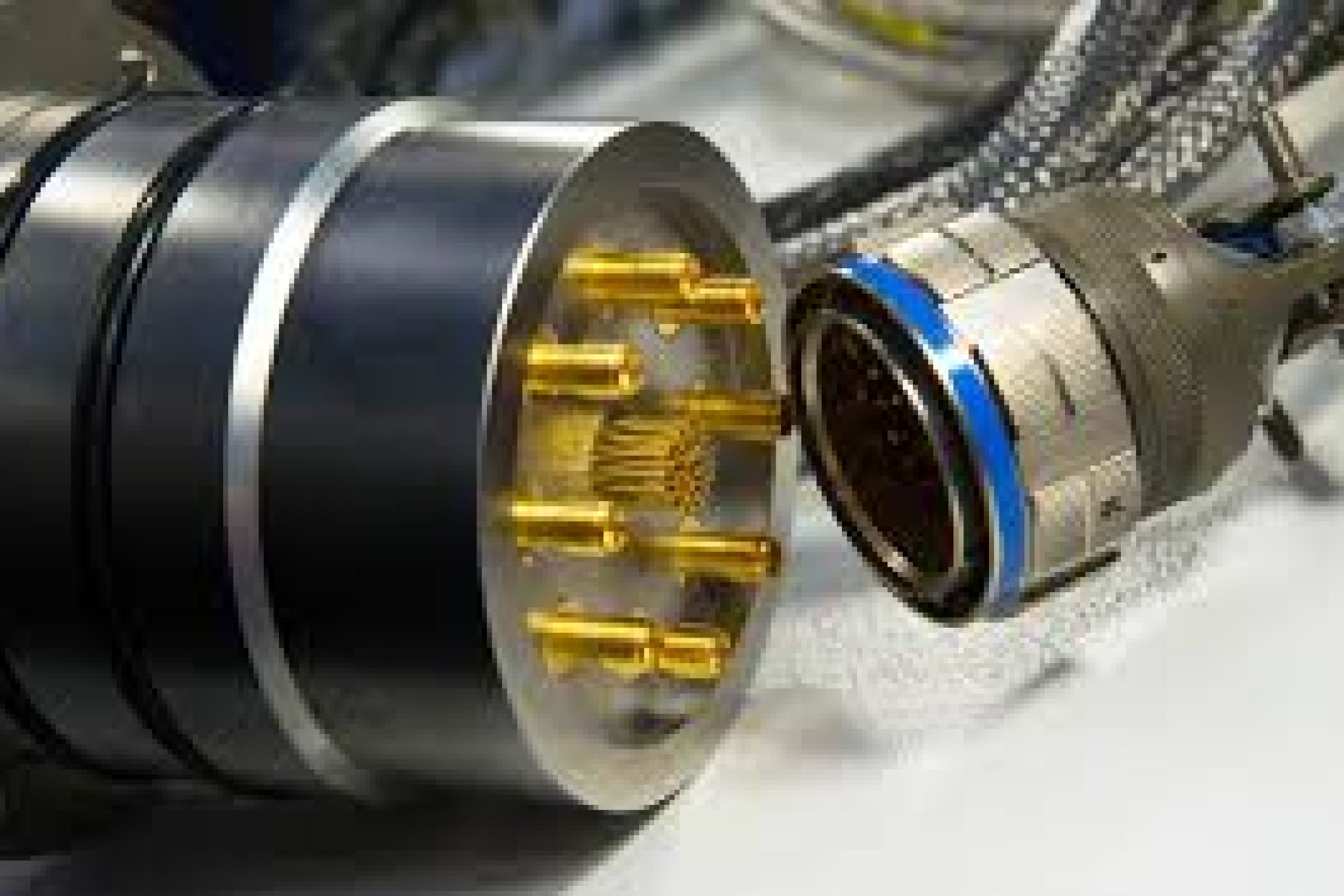
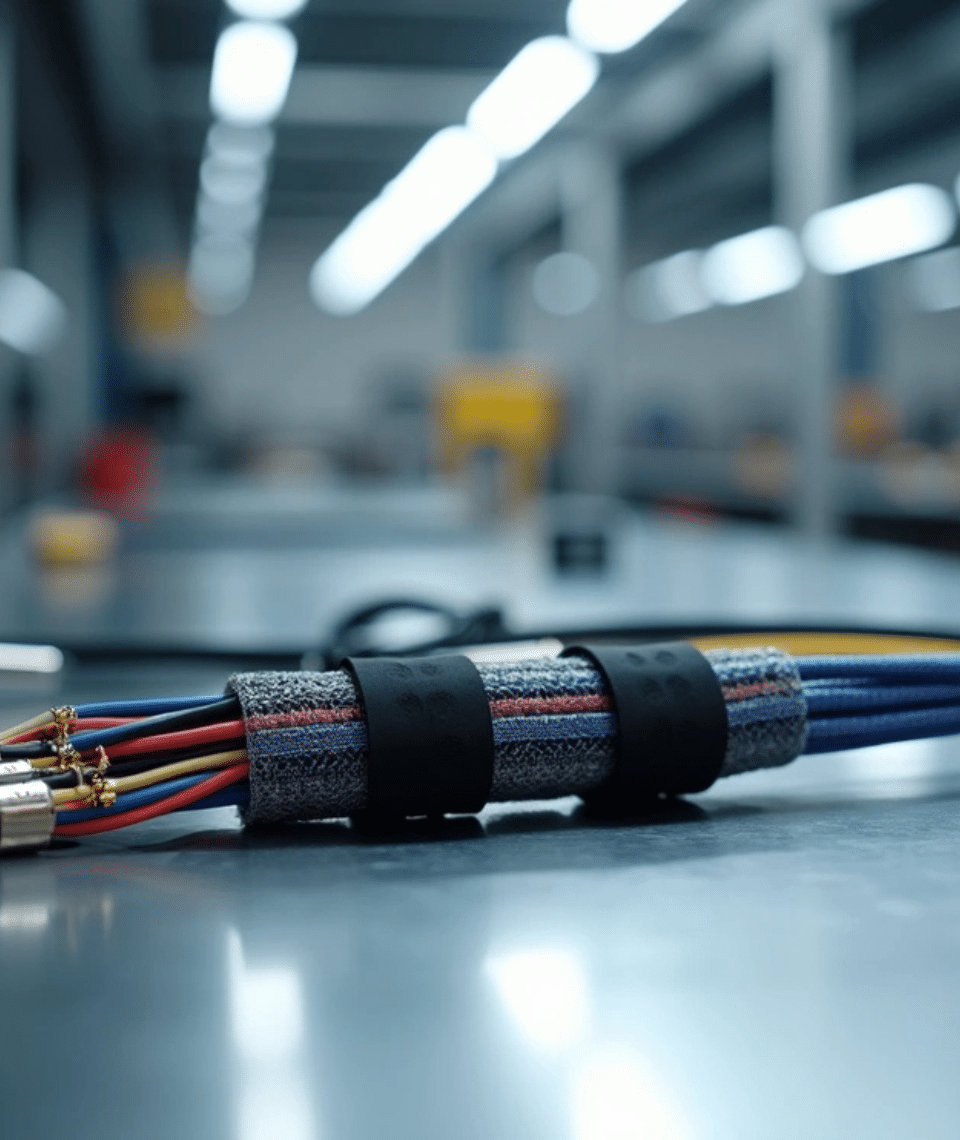
Cable assemblies represent organized groups of cables or wires arranged into a single unit. These structured bundles efficiently transmit electrical signals or power between various components in a system. Each assembly consists of conductors bound together by durable materials such as rubber, vinyl, electrical tape, or thermoplastic materials, ensuring proper organization and protection.
Unlike loose wires, cable assemblies provide several advantages. They protect the cables against the adverse effects of vibrations, abrasions, and moisture. By constricting the wires into a non-flexing bundle, they optimize space usage and decrease the risk of electrical shorts. Furthermore, installation time decreases since technicians only need to install one harness instead of multiple individual wires.
Though often used interchangeably, cable assemblies and wire harnesses have distinct differences. The primary distinction lies in their construction and protection level.
Cable assemblies feature all wires enclosed within a single, heavy-duty protective sheath, typically made from materials such as shrink-wrapped thermoplastic, vinyl, or polyurethane. In contrast, wire harnesses simply group individually insulated wires together with a basic covering, making each wire visible and separable as needed.
Consequently, cable assemblies offer superior protection against environmental hazards, making them ideal for demanding outdoor applications or harsh conditions. Their robust exterior shields the interior wires from heat, friction, moisture, and abrasion. Alternatively, wire harnesses offer a lower-cost organizational solution that is better suited for indoor environments where environmental protection is less critical.
Cable assemblies serve as critical components across numerous industries due to their versatility and reliability. In the automotive sector, they connect everything from basic lighting systems to complex navigation equipment. The aerospace industry relies on these assemblies for communication systems and navigation tools that must withstand extreme conditions.
Additionally, industrial automation depends on cable assemblies to power machinery and automate processes in factory settings. The telecommunications field uses them extensively for signal transmission in data centers and network hubs. Medical equipment manufacturers incorporate specialized assemblies in diagnostic and treatment devices such as MRI machines and surgical robots.
Modern renewable energy systems, specifically solar panels and wind turbines, utilize cable assemblies for efficient energy transmission and system connectivity. As electronics become more sophisticated, these organized wiring solutions continue to play an essential role in ensuring reliable performance across virtually all engineering applications.
Electrical design begins with understanding voltage requirements, signal type, and environmental conditions. These factors determine conductor size selection, shielding needs, and overall assembly configuration. Proper conductor sizing based on power load requirements is crucial, with ambient temperature factored into calculations.
Signal integrity is particularly important for data transmission. Impedance becomes a significant factor in large cable runs, where signal loss can cause network latency and increased noise. For high-frequency applications, cables with low dielectric constants perform better, reducing energy loss through the cable.
Shielding effectiveness depends on the proper termination of connectors at both ends of the assembly. As a rule, the overall effectiveness is dictated by the largest opening throughout the assembly—the smaller, the better.
Mechanical considerations are vital for cable assemblies that must withstand physical forces. Stress is a primary concern, particularly in high-flex applications where cables experience repeated bending. The maximum stress in any part of a cable can be calculated using the modulus of elasticity, distance from the neutral axis, and minimum bend radius. To minimize fatigue and prevent conductor breakage, designers should aim for larger bend radii and smaller cable diameters whenever possible.
Temperature extremes pose another significant challenge. Low temperatures can be equally harmful as high temperatures because insulation tends to freeze and crack. Moreover, cables in industrial settings may experience temperature ranges from cold to scorching heat, affecting conductor resistance and insulation integrity.
Vibration resistance is essential for assemblies used in dynamic environments. Constant movement generates heat and accelerates material deterioration, particularly at termination points. For applications requiring frequent movement, consider cables with high-flex construction or specialized strain relief components.
Insulation materials serve dual purposes: electrical isolation and environmental protection. Common options include:
PVC: Flexible and flame-resistant, but with poor heat tolerance; suitable for general indoor use
Polyethylene/Polypropylene: Low dielectric constants ideal for high-speed signals
Fluoroplastics (FEP, PFA, PTFE): Excellent for harsh environments with high temperature and chemical resistance
Polyurethane (PUR): Highly elastic and abrasion-resistant, perfect for industrial applications with frequent bending
Silicone: Excellent for medical and aerospace applications requiring high-temperature resistance
The outer jacket provides the final defense against environmental hazards. Materials range from standard PVC for basic protection to specialized options like stainless steel armor for crush resistance up to 400 pounds per linear inch.
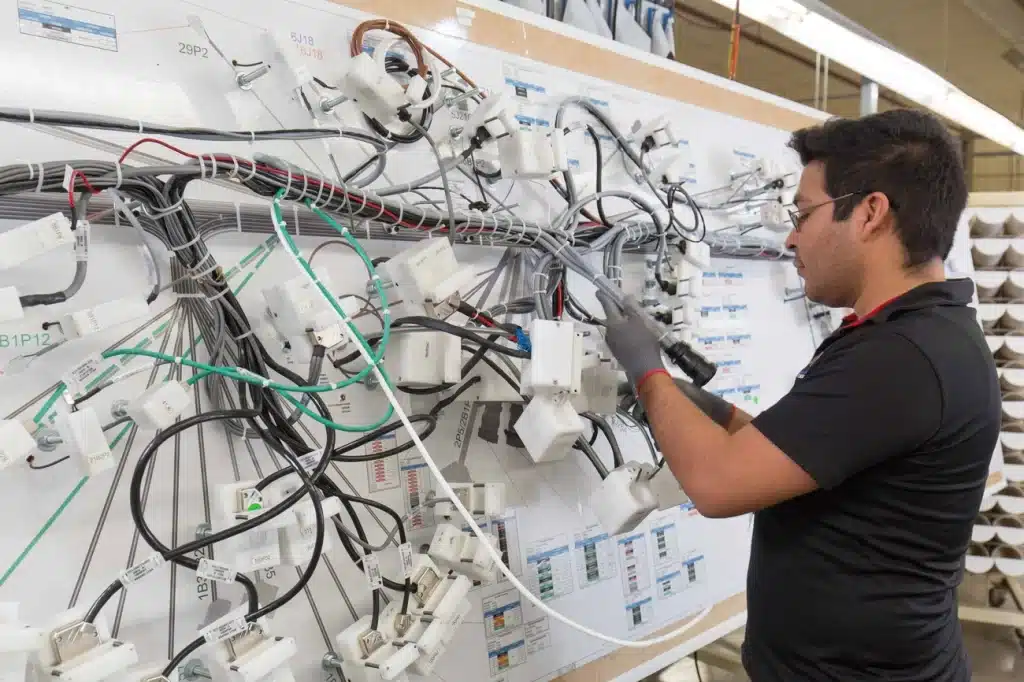
Cable assembly manufacturing has evolved from highly manual operations to increasingly automated processes, with each approach offering distinct advantages in different scenarios.
Currently, many cable assembly operations involve a blend of manual and automated techniques. Manual assembly relies on skilled technicians who cut, strip, and terminate wires individually. This approach offers flexibility for custom designs and small production runs. In contrast, automated systems utilize laser cutters programmed to specific tolerances for wire cutting and rotary tools for precise insulation removal. These machines can handle thousands of components per hour with micron-level precision, substantially increasing throughput without sacrificing quality.
Terminals come in various configurations designed for specific applications:
After assembly, testing ensures reliability and performance. Pull testing evaluates mechanical strength through various methods, including pull and break (applying force until failure), pull and hold (maintaining constant force), or pull and return (applying then removing force). Electrical testing encompasses continuity checks to verify connections, high-potential (HIPOT) testing to confirm insulation integrity, and circuit simulation to evaluate signal transmission and impedance control. These tests help identify potential issues before products reach customers, thereby ensuring consistent quality across all manufactured assemblies.
Quality standards serve as the backbone of reliable cable assembly production. Throughout the industry, manufacturers follow established guidelines to ensure consistent performance and dependability in their products.
The IPC/WHMA-A-620E represents the industry-consensus standard for cable and wire harness assemblies. This comprehensive document prescribes practices and sets quality expectations for producing crimped, mechanically secured, and soldered interconnections. Essentially, it provides explicit accept/reject criteria that guide professionals during the inspection process. The standard underwent significant revisions in its latest version, including a new chaptering system and improved alignment of soldering requirements with IPC J-STD-001.
Standards ensure cable assemblies meet specific safety, reliability, and performance requirements across industries. At TT Electronics, cable harnesses built to Class 3 standards support aerospace, defense, and high-reliability industrial applications. Indeed, many manufacturers operate under globally recognized certifications including ISO9001, AS9100, and Nadcap accreditation.
These standards provide a common framework for communication between manufacturers and customers. Therefore, engineers should specify which class standard their cables must meet during design and manufacturing, with most quality-focused manufacturers defaulting to Class 2 standards at minimum.
Cable assemblies undoubtedly form the backbone of modern engineering systems across multiple industries. Throughout this article, we’ve explored how these organized wire bundles provide significant advantages over loose wiring by enhancing protection against environmental hazards while simplifying installation and maintenance processes.
First and foremost, understanding the fundamental difference between cable assemblies and wire harnesses helps engineers make appropriate selections for specific applications. While wire harnesses offer cost-effective solutions for controlled environments, cable assemblies with their robust protective sheaths excel in harsh conditions where reliability cannot be compromised.
Additionally, proper design considerations prove critical for optimal performance. Mechanical factors such as stress management, temperature tolerance, and wear resistance must be carefully balanced with electrical requirements, including voltage needs, signal integrity, and compliance with industry standards. Similarly, material selection for both insulation and protection significantly impacts the longevity and reliability of the finished assembly.
Q1. What is the primary difference between a cable assembly and a wire harness? Cable assemblies have a single heavy-duty protective sheath enclosing all wires, while wire harnesses group individually insulated wires with a basic covering. Cable assemblies offer superior protection against environmental hazards, making them ideal for demanding outdoor applications or harsh conditions.
Q2. What are the three product classifications for cable assemblies according to industry standards? Cable assemblies are categorized into three classes: Class 1 for general electronic products with basic functionality requirements, Class 2 for dedicated service electronics requiring extended performance, and Class 3 for high-performance products used in harsh environments or mission-critical applications.
Q3. What are some common testing methods used in cable assembly manufacturing? Common testing methods include pull tests to evaluate mechanical strength and electrical tests such as continuity checks, high-potential (HIPOT) testing, and circuit simulation. These tests help ensure reliability and performance before the products reach customers.
Q4. How do material choices affect cable assembly performance? Material selection for insulation and protection significantly impacts cable assembly performance. Different materials like PVC, polyethylene, fluoroplastics, polyurethane, and silicone offer varying levels of flexibility, temperature resistance, and protection against environmental factors, allowing engineers to choose the best option for specific applications.
Q5. Why are industry standards important in cable assembly manufacturing? Industry standards, such as IPC/WHMA-A-620E, ensure consistent quality, safety, and reliability across different manufacturers. They provide a common framework for communication between manufacturers and customers, helping engineers specify the appropriate quality level for their applications and ensuring that cable assemblies meet specific performance requirements.