- 3876 Industrial Ave, Rolling Meadows, IL 60008
- Info@auctuselectro.com

- 3876 Industrial Ave, Rolling Meadows, IL 60008
- Info@auctuselectro.com
Industrial Wiring Harnesses
- Home
- Industrial Wiring Harnesses
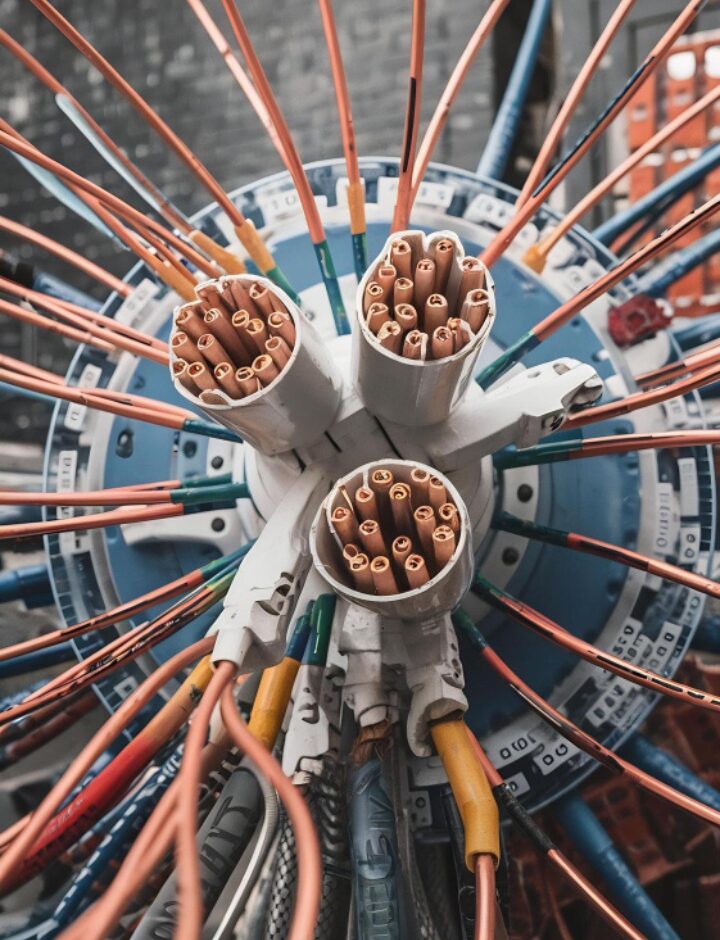
Industrial Wiring Harnesses: Built to Survive Oil, Vibration, and Continuous Flex
Industrial Wiring Harnesses, Industrial environments are not gentle. They attack wiring harnesses with three specific killers: oil and chemicals, constant vibration, and continuous flexing. If your harness isn’t engineered for these threats, it will fail—and when it fails, production stops.
At Auctus Electro Assembly, we have spent over 60 years building wiring harnesses that thrive where standard cables perish. Here is what makes an industrial-grade harness different, and why your automation, robotics, or heavy equipment demands nothing less.
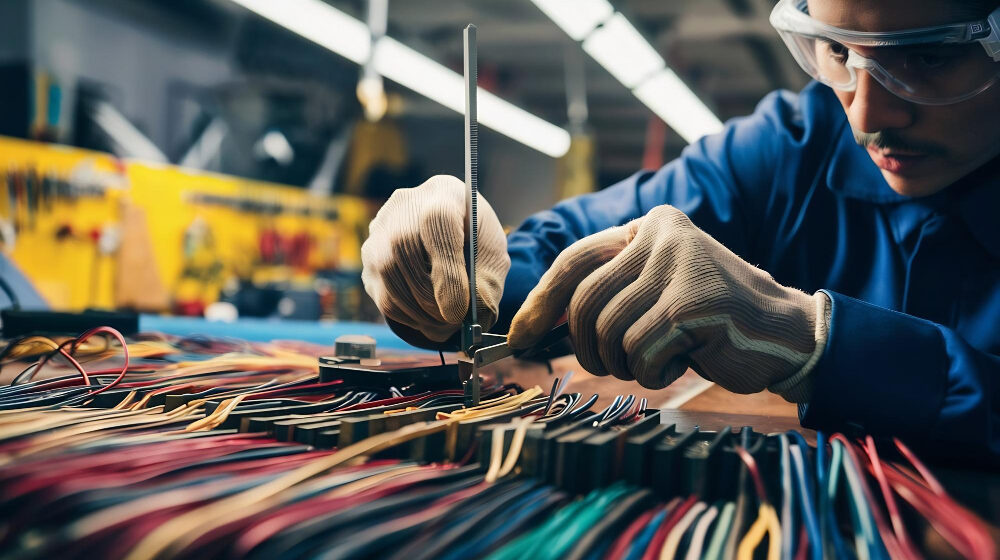
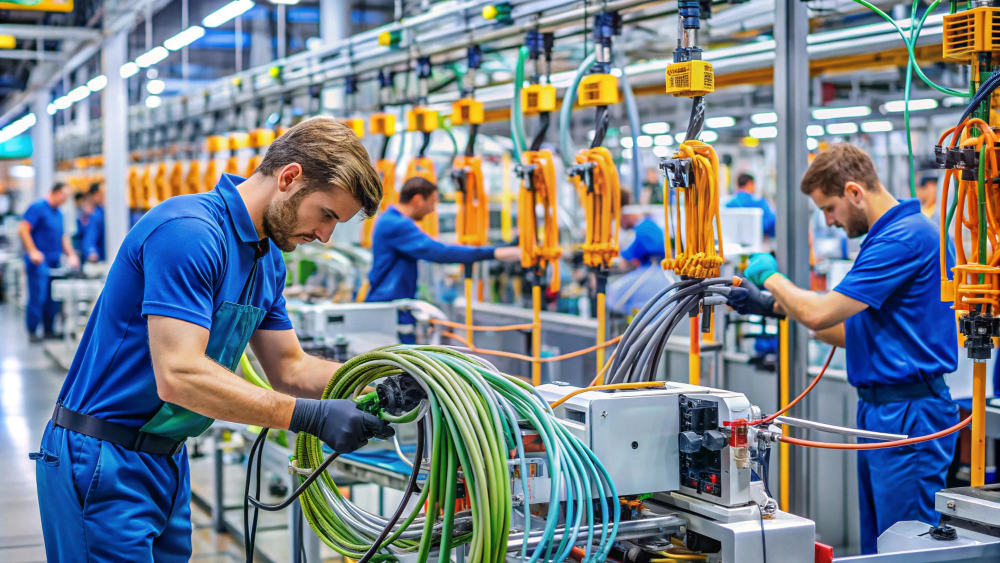
The Three Killers of Industrial Wiring Harnesses
1. Oil and Chemical Exposure
Cutting fluids. Hydraulic oil. Solvents. Coolants. On a factory floor, these are not occasional spills—they are airborne mist settling on every surface.
Standard PVC jackets soften, swell, or crack when exposed to industrial fluids. Once the jacket fails, contaminants reach the conductors. Shorts follow. Signals drop. Production stops.
The industrial solution: PUR (polyurethane) or TPE jackets that chemically resist industrial fluids. These materials maintain their integrity even when constantly splashed with oil or exposed to cutting fluids.
2. Vibration
Motors run. Conveyors move. Equipment shakes. Vibration is constant in industrial environments.
Standard wiring harnesses use solid conductors or low-strand-count wires. Under continuous vibration, these conductors work-harden and fracture. The result: intermittent signals that are nearly impossible to diagnose, followed by complete failure.
The industrial solution: High-strand-count conductors that flex with vibration rather than resisting it. Each individual strand is fine enough to move independently, distributing stress and preventing fatigue fractures.
3. Continuous Flex
Robotic arms. Cable carriers. Linear actuators. Moving machinery. In industrial automation, nothing stays still.
Standard cables are rated for installation—bend them once and leave them. They are not designed for millions of cycles. Under continuous flex, conductors break. Shields fracture. Jackets abrade.
The industrial solution: Flex-rated cable designs tested for millions of cycles. Special stranding geometries, optimized lay lengths, and tough jackets engineered specifically for dynamic applications.
What an Industrial Wiring Harness Actually Looks Like
Industrial Wiring Harnesses, An industrial harness is not a standard harness in a different color jacket. Every component is selected for survivability.
Component | Commercial Grade | Industrial Grade |
Conductor | Solid or low-strand | High-strand (Class K or M) for flex life |
Insulation | Standard PVC | Oil-resistant, temperature-rated compounds |
Jacket | General-purpose PVC | PUR, TPE, or specialty polymers |
Shielding | None or minimal | Heavy foil + braid for EMI rejection |
Connectors | Standard plastic | Metal, overmolded, IP67-rated |
Strain Relief | None | Molded, tapered, flex-optimized |
The Connector: The Industrial Weak Point
In industrial environments, the connector is the most vulnerable component. Standard RJ45 or D-sub connectors are not designed for vibration. They work loose. Contacts corrode. Latches break.
Industrial-grade connectors feature:
- Threaded or locking couplings (M12, M8, circular military-style)
- Metal shells for durability and EMI shielding
- IP67 or higher sealing against fluids and particulate
- Overmolded backshells that become one piece with the cable
Flex Testing: The Proof Is in the Cycles
A harness rated for “continuous flex” should have data to prove it. At Auctus, we reference and build to standards that specify:
- Millions of flex cycles without conductor failure
- Torsion testing for robotic applications
- Bend radius validation to prevent over-stressing
- Cable carrier testing for chain-compatible designs
The Auctus Difference: Built for Industry
We have served industrial clients for over 60 years. We know what happens when a harness meets cutting oil, hydraulic fluid, and continuous motion—because we have seen it thousands of times.
Our industrial wiring harnesses feature:
- High-strand conductors rated for millions of flex cycles
- PUR, TPE, or custom-compounded jackets resistant to oils and chemicals
- Foil + braid shielding for EMI rejection in electrically noisy environments
- Overmolded connectors with IP67 sealing
- 100% factory testing with full documentation
- Custom lengths, breakouts, and labeling
Applications That Demand Industrial-Grade Harnesses
Robotic Cells: Robots flex constantly. Every axis movement stresses the harness. Standard cables fail in weeks. Industrial flex-rated harnesses survive for years.
Machine Tools: Cutting fluid is everywhere. Standard jackets soften and fail. PUR-jacketed industrial harnesses resist chemical attack and keep running.
Conveyor Systems: Vibration is constant. Connectors work loose. Industrial harnesses with locking connectors and overmolded strain relief stay connected.
Material Handling: Cables drag, flex, and abrade. Tough jackets and high-strand conductors survive the mechanical abuse.
Contact Auctus Electro Assembly today.
Industrial Wiring Harnesses, Tell us about your application—motion, exposure, data rate, connector type. We will engineer a solution that works the first time, every time.
Because in manufacturing, the wiring harness is not a component. It is the nervous system of production.
Auctus Electro Assembly
Trusted partner for wire harness & cable assembly, and electronics manufacturing since 1962.
Industrial-grade solutions. Factory-floor proven.
Info@auctuselectro.com
https://auctuselectro.com/
Go To Top